Showing posts with label non-fiction. Show all posts

Wednesday, August 26, 2020

Steve Jobs, by Walter Isaacson

Steve Jobs

Steve Jobs was an asshole. He was brutally honest, took credit for other people's work, and believed ordinary rules didn't apply to him. (My "favorite" example of this last attribute is that he never put a license plate on his car and always parked it in a handicap spot.) For someone that is renowned as an artist and visionary, he ironically saw the world in black and white: everything was either "genius" or "bullshit." Despite all this, he changed the world in a profound way that hasn't been seen since Thomas Edison.

Isaacson does an excellent job of describing this mercurial and complicated person. Jobs comes across as temperamental and unsympathetic, but his passion for his work shined through allowing his friends and employees to forgive a lot of his behavior. He had the uncanny knack of seeing to the heart of a problem, but still allowed himself to be swayed by psychics, herbal therapies and natural healers, and bizarre diets and cleanses. He raged against Microsoft and Google, often accusing them of stealing his work, when in reality he himself stole virtually everything unique about the Macintosh from Xerox. Isaacson takes the difficult task of describing an unlikable man and achieves something amazing: at the end I found myself admiring Steve Jobs.

First Sentence:
When Paul Jobs mustered out of the Coast Guard after World War II, he made a wager with his crewmates.

Wednesday, August 05, 2020

Barrel-Aged Stout and Selling Out, by Josh Noel

Barrel-Aged Stout and Selling Out: Goose Island, Anheuser-Busch, and How Craft Beer Became Big Business

This is more than just the history of Goose Island Beer Company; this is the history of how Anheuser-Busch went from ignoring craft beer to trying to kill craft beer to (somewhat) embracing craft beer.

Goose Island was founded in 1988 and fairly quickly established themselves as a solid brewer in Chicago. In 1992 they basically invented the bourbon barrel-aged movement with their Bourbon County Stout and placed themselves among the leaders of the growing craft beer movement. Around this same time the explosive growth in craft beer started cutting into the profits of Anheuser-Busch and MillerCoors so they did what any near-monopoly does: they tried to kill their competitors. This cold war between large and small brewers continues through today, but in 2011 a major shift happened: AB InBev bought Goose Island outright. This was seen as traitorous by the craft industry and the Brewers Association which governs craft reacted by officially defining craft beer as "small, independent, and traditional" which meant that Goose Island went from a leader in the industry to an outsider overnight.

Noel does a good job of telling the story and showing the logic behind the decisions of the major players. He is fairly even-handed (if anything, he may have underplayed the outrage and sense of betrayal that occurred when the purchase occurred) and accurately noted that the craft beer community breaks down into two camps: people that care about how the beer tastes and people that care about who profits from the sales. (Personally I feel more of a kinship with the first group, but certainly understand the animosity towards "big beer" and their bully pulpit.) This is a fascinating and entertaining narrative, and Noel describes it well. His conclusion is spot-on, capturing the bittersweet result of the war. "Craft beer won: it forced the biggest beer company in the world to change. Craft beer lost: it had been commandeered by the biggest beer company in the world."

First Sentence:
On a Thursday evening in 1986, as a spring storm pounded the Dallas-Ft. Worth airport, John Hall sat in an airplane on the rain-glazed tarmac and did something he would recount for the rest of his life.

Wednesday, April 15, 2020

The Success of Open Source, by Steven Weber

The Success of Open Source

Parts of this book are interesting and engaging, and parts are mind-numbingly boring. The author is a professor at Berkeley and his scholarly background shows through strongly. The history of open source software is fascinating, and Weber does an excellent job of walking the reader through its genesis at AT&T Bell Labs to the widespread acceptance found today. His description of open source as "an odd mix of overblown hype and profound innovation" is spot-on, and his comparison of open source to religion was insightful—anyone can read the Holy Bible without a "license" from a Christian sect. The description of the constantly evolving social dynamics of open source is similarly compelling. Where the book drags interminably is during the discussions of the economic and political bases of the movement. Sadly, these last discussions are interspersed through all the interesting parts, making me almost afraid of turning each page for fear of encountering a discourse on tracking "the institutional isomorphism literature by encouraging hierarchical governments to remake their security organizations as networks to interface successfully with their networked adversaries." Well worth your time for the history and underpinnings of open source, but unless you are a political scientist or economist be prepared for a bit of a slog.

First Sentence:
This is a book about property and how it underpins the social organization of cooperation and production in a digital era.

Thursday, March 19, 2020

Heaven and Hell: My Life in the Eagles (1974-2001), by Don Felder

Heaven And Hell: My Life In The Eagles (1974 2001)

I've always loved the Eagles; they are one of the few bands that I regret not getting to hear in person. (I'd dearly like to find a time machine and go back to a show in 1977 when Jimmy Buffet was the opening act!) They are still touring, but not with the same members that created the magic in the 1970's. One of those former members is Don Felder, guitarist and the primary writer of (among others) "Hotel California"—one of the greatest Eagles songs ever.

This biography comes across as fairly honest; Felder doesn't gloss over how poorly he treated his father or first wife, although he does try and justify the behavior a bit. The highlight, of course, is the history of the Eagles that is included along the way. Don Henley and Glenn Frey have terrible reputations (sadly not uncommon with talented musicians; see Eddie Van Halen, Ike Turner, Morrissey, Michael Jackson, Frank Sinatra, ...) and Felder does nothing to clear their names. In 2001 he was fired from the band and subsequently filed a lawsuit for wrongful termination and breach of fiduciary duty. Unfortunately the book only lightly covers this, unlike the great amount of detail that went into the time leading up to the acrimonious split. It isn't clear if the lack of substance here is due to a confidentiality agreement or not wanting to relive uncomfortable memories, but it hurt the overall story quite a bit—almost like reading a mystery with the last chapter missing. Despite being one-sided, I found this to be a compelling read and had me listening to the Eagles on repeat on Spotify.

First Sentence:
We could hear the rumble of the crowd in the dressing room.

Thursday, March 05, 2020

Bonk, by Mary Roach

Bonk: The Curious Coupling of Science and Sex

If you are shy or uncomfortable with the topic of sex, then this is not the book for you. The title of the introduction is "Foreplay" and it ramps up from there. Bonk is subtitled The Curious Coupling of Science and Sex and this is not an exaggeration. From scientific examinations of the penis, testicles, and clitoris to coital imaging to sex toys to genital transplants and implants, this book has it all. Oh, and it is funny as hell, too!

Roach has an amazing writing style that allows the reader to delve deeply into the mechanics, psychology, and science of intercourse while maintaining a laugh-out-loud approach to the topic at hand. For instance, by taking MRIs of people in flagrante delicto scientists learned that after penetration the penis has the shape of a boomerang. Roach helpfully adds, "But not the precise dynamics. If you hurl an uprooted penis into the air, it will not come back to you. It will most likely, and who can blame it, want nothing to do with you." We also learn that sex hormones "make individuals perceive other individuals as more attractive than they'd normally perceive them. Hormones are nature's three bottles of beer." Even the footnotes are hilarious: "Nasal congestion is an erection inside your nose." "Who clubs a hamster? What would you even use to deliver “a blow” to a head that small?" "The Anal Pad should not be confused with a prior invention called the Anal Napkin, which, in turn, should not be confused with the dinner napkin." "Nominations for a Nobel Prize ... remain secret for fifty years. You make the claim, and nobody can prove otherwise until after you're dead. Add one to your résumé today!"

I enjoyed her earlier book Stiff (about cadavers, not erections) and this one was just as entertaining. If you are interested in how scientific research about sex is conducted or the physiology of the reproductive system (or simply want to laugh a lot), Bonk is a good choice. If, however, you are less interested learning in what an orgasm scientifically is and would rather learn how to cause an orgasm, maybe check out Ian Kerner's She Comes First.

First Sentence:
Albert R. Shadle was the world's foremost expert on the sexuality of small woodland creatures.

Tuesday, January 28, 2020

Leonardo da Vinci, by Walter Isaacson

Leonardo da Vinci

Before reading this biography I'll admit I didn't know a lot about Leonardo da Vinci other than being the painter of the Mona Lisa, the Last Supper, and the Vitruvian Man. Now I know he was a true Renaissance man—arguably the first Renaissance man—and a man ahead of his time. Centuries before minds like Newton, Galileo, Bernoulli, and Valsalva were experimenting, da Vinci was discovering concepts in a huge number of fields: relativity, motion, metallurgy, fluid dynamics, cartography, anatomy, optics, geology, ichnology, and even stagecraft just to name a few. The reason we don't associate Leonardo with all these topics is that he largely kept his discoveries in his personal notebooks rather than publishing. When he died these notebooks were scattered amongst collectors, not being catalogued and available for general study until well after other luminaries had rediscovered what he already knew.

Isaacson does an amazing job examining much of da Vinci's art in detail, discussing the approach to light and shade, perspective, and color and pointing out how the pursuit of science (especially anatomy and geology) was accurately reflected in his work. While impressed at the detail, I admit that after the first few my eyes would glaze over a bit as it all seemed a bit repetitive; I apparently don't have the right genes to truly appreciate art at this level. I much more enjoyed the history of the paintings, learning which pieces were actually finished (not many!) and which have been lost to time.

Many, many of Leonardo's notebook pages are reproduced here as well, and these are the true heart of the book. The detail in everything from horses in motion to deconstructed machines to muscular and skeletal body parts is both amazing and beautiful. His notes are on nearly every page as well, sometimes right over the drawings or in the margins. da Vinci wrote in mirror script (right to left) and in Italian, giving even a simple paragraph a look of beauty.

Isaacson's admiration for da Vinci's genius shines through nearly every page, causing a sense of wonder for the reader. Weighing in at over 500 pages this isn't a quick read, but well worth the time it takes. I could have done with less art criticism and more actual history (topics like his homosexuality and his intense rivalry with Michelangelo are only briefly covered, and the oft-changing politics of Europe at this time even less so) but this is still a wonderful book.

First Sentence:
Leonardo da Vinci had the good luck to be born out of wedlock.

Monday, December 09, 2019

A Civil War: Army vs. Navy, by John Feinstein

A Civil War: Army vs. Navy - A Year Inside College Football's Purest Rivalry

I'm an unapologetic Longhorn football fan, but I've always been fascinated by the Army-Navy rivalry. It is the only game attended by the entire student body of both schools, and even when the teams are awful (which sadly is pretty normal these days) the game is exciting and the spectacle captivating. I love watching this game each year, the only non-Texas game that is appointment viewing for me. So when I spotted this book in a discount bin about the 1995 Army and Navy seasons, culminating in their clash at the end, I snatched it up and saved it to read just before this year's bout. Unlike what many of the refs did during their respective seasons, that was a good call.

Feinstein is known more for his books on basketball and golf, and it shows a bit here: his college football knowledge seems a bit lacking in places. For instance, he claims the Army-Navy game is the best rivalry in the country; it is certainly in the top echelon, but what about Harvard-Yale? The World's Largest Cocktail Party? The Battle for the Axe? Michigan-Ohio State? The Iron Bowl? Or the greatest of them all, the Red River Showdown? Similarly with stadiums, he calls Notre Dame Stadium "college football's most famous stadium." Um... how about the Rose Bowl, or Michigan Stadium, or Tiger Stadium? Even the name of the book is a bit odd; the Civil War is what the annual Oregon-Oregon State game is called; nothing to do at all with Army-Navy.

That said, this is a wonderful book and the Army-Navy game is one of the treasures of college football. Feinstein does a great job of ping-ponging between the Army and Navy squads as their year progresses, becoming a biographer of sorts for a handful of players and coaches on each team. Along the way a lot of the traditions and history of the schools and squads are told giving more than a glimpse into what life at a service academy must be like. Even with Feinstein's hyperbole and occasional pretentiousness this was a fantastic book and I look forward to watching the game on Saturday!

First Sentence:
Almost thirty minutes after the last play of his college football career, Jim Cantelupe, still dressed in the black uniform with the gold number 22 on the back and front, walked down a dank, winding hallway in the bowels of Philadelphia's Veterans Stadium.

Monday, December 02, 2019

Wishful Drinking, by Carrie Fisher

Wishful Drinking

Based on Fisher's one-woman show, this memoir is brutally honest, sincere and candid, and damn funny. It is a very fast read that has an odd but endearing style of writing: choppy but still very readable. More a collection of anecdotes than a narrative it still manages to cover a lot of her life: being born to famous showbiz parents, her two marriages and subsequent divorces, the death of a close friend (in her bed!), her addictions, and her mental health issues. She manages to take all this pain and turn it into a witty, insightful set of stories. Well written, and well done.

First Sentence:
I have to start by telling you that my entire existence could be summed up in one phrase.

Monday, November 11, 2019

Domain-Driven Design, by Eric Evans

Domain-Driven Design: Tackling Complexity in the Heart of Software

I first read this book several years ago. While recently cleaning the garage I found it again in a box from a previous job where I must have had it on a shelf. Flipping through it showed how much I'd forgotten, so I decided to read it again.

This is a great book, filled with deep concepts and clear examples. Evans says, "Software designs tend to be very abstract and hard to grasp. Developers and users alike need tangible ways to understand the system and share a view of the system as a whole." This is a great summary of what this text teaches. Many patterns are detailed, and approaches to design that are both simple and rarely found in the wild. Most software, even that with good initial design, tends to grow over time in ways that don't necessarily reflect the initial approach. This makes the code brittle and hard to reuse, the dreaded "code rot" problem. The impact can be greatly reduced with the creation of a ubiquitous language shared by all interested parties and a commitment to continual design, not just refactoring code. "One way or another, creating distinctive software comes back to a stable team accumulating specialized knowledge and crunching it into a rich model. No shortcuts. No magic bullets."

The biggest drawback to this book is that it is dense. Over 500 pages, and a lot of information is packed into every page. Makes reading it—at least at a pace where information can be distilled and remembered—take a long time. I suppose this is really a back-handed complement, as a text this complete should be expected to be substantial, but I found it took longer than usual to get through the whole thing. This is a book that every serious software architect should read, preferably on a regular basis!

First Sentence:
This eighteenth-century Chinese map represents the whole world.

Sunday, September 29, 2019

Angry Optimist, by Lisa Rogak

Angry Optimist: The Life and Times of Jon Stewart

Jon Stewart and The Daily Show was must-see television for me for years. His ability to skewer the news (and the newsmakers) was both hilarious and educating, and his eye for talent was amazing: Steve Carell, Stephen Colbert, John Oliver, Samantha Bee, Ed Helms, Rob Corddry, and Josh Gad (among many others) all made names for themselves on the show. This biography covers Stewart from birth to around 2015 when he left The Daily Show. Largely a recitation of the main points of his life (birth, high school, college, stand-up, TV, marriage) there actually is an interesting tidbit here and there, such as officially changing his name to Stewart (after his middle name of Stuart) not to appear "less Jewish" but to distance himself from his father. Not a lot of insight into Stewart or what makes him tick, but as he is a largely private man a lot of what is in here was new to me. Clearly an unofficial biography.

First Sentence:
When Jonathan Stuart Leibowitz was born on November 28, 1962, in New York City to Donald and Marian Leibowitz toward the end of the huge postwar baby boom, he began a typical middle-class American childhood that was unremarkable for the time, and apparently very much strived for by the majority of people in the United States.

Tuesday, September 17, 2019

The Last Sheriff in Texas, by James P. McCollom

The Last Sheriff in Texas

This book chronicles the changes the state of Texas underwent after WWII, moving from mostly rural to mostly urban, and seeing the cowboy fade from a real profession to a role in the movies. Sheriff Vail Ennis of Bee County was a violent, uncompromising man with a flair for violence—he shot and killed eight men while in office between 1944 and 1952. Johnny Barnhart was raised in Bee County, but while attending the University of Texas uncovered a passion for civil rights that set him apart from his conservative neighbors. These two icons clashed during the election of 1952, forcing citizens to choose between frontier justice and law and order, changing Texas politics forever.

The story is told primarily via interviews and reminiscences with a healthy amount of historical context thrown in for good measure. I found it to be compelling (if very repetitive), although I can easily see how someone that isn't familiar with life on the Texas Costal Plain might find it slow and meandering. The book is part true crime, part political history, part biography, and part memoir resulting in a style that is a bit offbeat. On one page there will be a excerpt from a newspaper article, and on the next conversational dialogue from people long since dead. I found this see-sawing between fact and fabrication hard to get used to at first, but eventually settled down and enjoyed the story.

First Sentence:
The man who shot the sheriff was Roy Hines, thirty-four, ex-con, a grifter on his way from Oklahoma to Mexico.

Wednesday, August 21, 2019

Masters of Doom, by David Kushner

Masters of Doom: How Two Guys Created an Empire and Transformed Pop Culture

This is a fascinating and well-written history of first-person shooter video games and the two geniuses behind them, John Romero and John Carmack. The "Two Johns" are the gaming equivalent of Apple's Jobs and Wozniak, with Romero being the visionary and Carmack being a programming virtuoso. These two personalities initially combine with great synergy to create some of the greatest games ever made (Wolfenstein 3D, Doom, and Quake to name a few) but as success finds them they start to move in different directions. Eventually the conflicts are large enough Romero is fired from the company he founded with Carmack, signaling the beginning of the end.

This book reads more like a novel than a typical corporate history, which keeps it entertaining and captivating throughout. Thoroughly researched, the timeframes cover the rise of personal computers and the part games played in their growth. Hacker sub-culture and government outrage factor in largely as well, giving a holistic look at the rise of immersive computer games. I'm not much of a gamer myself (although I did play a fair amount of Doom back in the day at the office during lunch) but this book does a great job of keeping the subject matter interesting, focusing on the people rather than the games themselves. Highly recommended for anyone interested in the culture of computers or gaming in the 1990's.

First Sentence:
Eleven-year-old John Romero jumped onto his dirt bike, heading for trouble again.

Sunday, August 11, 2019

Van Halen Rising, by Greg Renoff

Van Halen Rising: How a Southern California Backyard Party Band Saved Heavy Metal

I do love me some Van Halen. I've seen them in concert with various lineups nine times and own every album (including a four CD bootleg set). Simply put, I believe they changed the sound of rock and roll and are the best band from this country to ever exist. When I found this book I was intrigued; I came late to Van Halen fandom (Diver Down was my first VH album) so when discovering this band history I realized I didn't know a lot about their history before getting signed. The author does a great job with a very well researched history and the story of how Van Halen became Van Halen is pretty damn interesting!

The Van Halen brothers came from a musical family; their dad was a professional jazz musician (he actually plays the clarinet on "Big Bad Bill (Is Sweet William Now") so they came by talent naturally. David Lee Roth was a born showman, but early on was a terrible vocalist. In fact, when he first met Alex and Eddie there was a strong mutual dislike amongst the three; this was obviously eventually overcome but even when they finally got together it was unclear if Roth was going to make it as the front man. (In fact, Ted Templeman who produced the first Van Halen albums seriously considered replacing Roth with another upcoming singer, Sammy Hagar!) Michael Anthony was added initially to provide a fuller vocal sound; in my opinion his spectacular background vocals and harmonies are a big part of what made Van Halen special. (I saw the A Different Kind of Truth tour where Anthony was replaced by Wolfgang Van Halen and the band simply doesn't sound the same.) The book ends in 1978 right after their first world tour (largely opening for a soon-to-be-Ozzy-less Black Sabbath) where Van Halen discovers they owe Warner Brothers $1.2 million for costs incurred on the tour.

While very well done, there are a couple of things that detracted from the story. Of the scores of interviews used to compile the narrative, surprisingly only Michael Anthony was included from the actual band. Anecdotes from the other members appear only as cited works from other publications. And yes, this is the story of the formation of the band (the subtitle is "How A Southern California Backyard Party Band Saved Heavy Metal") , but there has been so much drama since their debut with multiple singers and bass players I find myself wanting to read the next volume. Again, this was a great book and I recommend it to any rock fan, but it left me wanting an encore.

First Sentence:
It's rare that something so loud comes to life in someplace so quiet, but that's exactly how it happened with America's greatest rock band.

Saturday, July 13, 2019

Ghost in the Wires, by Kevin Mitnick with William L. Simon

Ghost in the Wires: My Adventures as the World's Most Wanted Hacker

Subtitled "My Adventures as the World's Most Wanted Hacker" this is a rollicking story of how Kevin Mitnick became a computer break-in artist, how he eluded the FBI for years, and how he was eventually caught. It is a fascinating read; he starts by breaking into the phone company to make free long distance calls, and continually improves his skills and systems access until he can control tapping any phone. He stole thousands of credit card numbers and personal details, and created multiple false identities to evade the FBI when they caught on. Mitnick claims he never used any of these details for personal gain, but instead simply approached hacking as a problem to be solved—he wasn't interested in the credit cards, just the challenge of obtaining them.

Mitnick goes into great detail about how he got into so many systems, and that detail is fascinating. Most of his entry points weren't purchased on the dark web, but obtained through fairly straightforward social engineering. We hear all the time about how we are never supposed to give out passwords over the phone or provide detailed answers for people we don't know, but over and over again Mitnick does exactly that. For example, he'd call someone and ask if they were authorized for a particular system, and when they said yes he'd reply with something like, Your password is '0128.'" The person on the other end would respond, "No, no, no. My password is '6E2H." And just like that, Mitnick had another password. Simple.

Mitnick comes off as antisocial, narcissistic, and arrogant which is a bit surprising as he is the author; I'd expect he'd tone down his disdain for authority or contempt of social mores. He shows a staggering lack of remorse, and his regrets all center around him getting caught. While not very likable, his story is compelling and hard to put down. If you are in any way interested in cyber crime or the dark side of technology, this is a must-read story.

First Sentence:
My instinct for finding a way around barriers and safeguards began very early.

Friday, June 21, 2019

Four Hours of Fury, by James Fenelon

Four Hours of Fury: The Untold Story of World War II's Largest Airborne Invasion and the Final Push into Nazi Germany

Operation VARSITY was the largest single-day airborne drop in history, and Four Hours of Fury tells the story. I've read about Pearl Harbor, D-Day, the Battle of the Bulge, and the war in the Pacific, but hadn't ever heard of this operation which was the first push into Nazi Germany, signalling the end of WWII. Fenelon does an amazing job; facts and maps abound, but the focus on the combatants (enlisted and officers on both sides of the battle) keeps the story humanized. He has an amazing knack to toss in a sentence that seems amusing or light-hearted at first, but after more thought is covering the horrors of war. "Instructors reminded them that on an actual jump, if they didn't feel the opening shock of their chute by 4,000, they had the rest of their lives to deploy their reserve." The last sentence is flat-out heart-wrenching, capturing what every wife must have felt when getting a death notice: "There would be no fifth wedding anniversary celebration." Well-written, informative, and hard to put down—not a combination of traits I often ascribe to a history book, but they apply to Four Hours of Fury in spades.

First Sentence:
Three months before they dropped into Germany, the troopers of the 17th Airborne entered combat for the first time in a manner entirely different from how they'd been trained.

Sunday, June 02, 2019

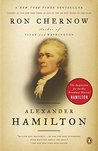
Alexander Hamilton by Ron Chernow

Alexander Hamilton

With the musical Hamilton making it to Austin this year I decided to read the book that inspired it before attending. A hefty tome—731 pages of narrative alone—but I managed to finish the day of the show. Very glad I did this; several friends said the show was hard to follow in places (especially around the actor playing Lafayette and Jefferson; his accent was thick and made him hard to understand even having heard the music before) but I was continually rewarded with recognition of where the songs matched the book. I found the musical to be excellent, and the book as well.

Other than Hamilton being the main author of The Federalist Papers, his visage being on the $10 bill, and his death as a result of a duel with the sitting Vice President at the time, my knowledge of the Founding Father was light on details. It is amazing to see how what he accomplished in only six years as the Secretary of the Treasury still affects us today. He fought for a strong central government and standing military led by the executive branch and for closer ties to Britian. He founded the US Mint, the first national bank, the Coast Guard, and the New York Post. His strong difference of opinion with Thomas Jefferson (who believed in strong state governments and a largely agrarian society) effectively created the political party system that still dominates politics now. Finally, Hamilton also was the first major American politican involved in a sex scandal, which in all likelihood prevented him from becoming President.

One quote that stuck with me: "[Hamilton] viewed 'hypocrisy and treachery' as 'the most successful commodities in the political market. It seems to the be the destined lot of nations to mistake their foes for their friends, their flatterers for their faithful servants." In our current era of amoral politicians, fake news, and idiological echo chambers this still rings true 226 years later. Hamilton was truly an impressive individual.

First Sentence:
Alexander Hamilton claimed Nevis in the British West Indies as his birthplace, although no surviving records substantiate this.

Sunday, April 14, 2019

The Arena, by Rafi Kohan

The Arena: Inside the Tailgating, Ticket-Scalping, Mascot-Racing, Dubiously Funded, and Possibly Haunted Monuments of American Sport, by Rafi Kohan

I really wanted to like this book, and I'm not entirely sure I didn't. Watching sports is a big part of my life: we have had season tickets for Longhorn football since 1992 and it has been longer than that since I've missed a home game1. When I travel, seeing a local event is one of my favorite pastimes, especially in a stadium I've not seen previously. So when I was gifted The Arena I was pretty excited, especially with a subtitle like Inside the Tailgating, Ticket-Scalping, Mascot-Racing, Dubiously Funded, and Possibly Haunted Monuments of American Sport. Sadly, there is more content about the people that inhabit these arenas than the arenas themselves.

It starts strong with a chapter that reads like a love-letter to some of the greatest old-school stadiums in America: the frozen tundra of Lambeau Field; Fenway Park, home of the Green Monster; and, the friendly confines of Wrigley Field. Later there is a chapter dedicated to the groundskeepers (whose work is seemingly only noteworthy when it is terrible), and later still a wonderful picture of the logistical nightmares of running these behemoths. All great stuff, and I wish there was more of it.

There is an entire chapter about the Superdome in New Orleans, but most of the detail is around the role the building played during the aftermath of Hurricane Katrina—and much of the Katrina rhetoric fell into the same quagmire as most other writing about the disaster, giving the impression that Katrina affected New Orleans and no other part of the country. Most disappointing was the chapter on college stadiums; all that is covered is the Penn State sexual abuse cover-up and Joe Paterno's legacy. So many collegiate cathedrals out there—the Rose Bowl, the Big House in Ann Arbor (there was a picture of this but no real discussion), Death Valley at LSU, hell, even Kyle Field—but instead all we get are the details of a vulgar scandal.

I'd recommend this unhesitatingly to any casual sports fan. The stories following the people in and around the buildings (scalpers, half-time entertainment, and unruly and misbehaving fans) are compelling and made the book hard to put down. I was hoping for more stories about the buildings themselves though, and ultimately left unsatisfied. A very good book, but a misleading title gave me a misleading impression.

First Sentence:
By the time I meet the mayor of Lambeau Field, he's already had a few.

1My mother went to hear the author speak in Dallas, and they gave away a door prize to the person that had been in the most professional, semi-pro, or collegiate stadiums; I believe the winner was in the low 50s. This idea fascinated me, so I went through my history and tried to record all the places I've seen some sort of organized sport. Turns out it is quite a few, but I have multiple friends that leave me in the dust here. I look forward to expanding this list over the coming years!

Tuesday, March 19, 2019

Fooling Houdini, by Alex Stone

Fooling Houdini: Magicians, Mentalists, Math Geeks, and the Hidden Powers of the Mind, by Alex Stone

This autobiography describes the journey of an magician from student to professional, while attempting along the way to explain the lasting appeal of the art of illusion. Stone lifts the veil on how a few tricks are done—earning the wrath of several of his brethren—but not so much that the sense of wonder is spoiled. Just reading how a double lift or a blind shuffle are executed doesn't give me the ability to know it when I see it, and certainly not the skill to pull it off myself! I imagine the next time I see a card trick I'll appreciate the hours of practice that make the tick possible as much as the illusion itself.

The cast of characters we meet along the way are what really make this book shine, though. Richard Turner is the world's greatest cardsharp and a blind man whose sense of touch is so sensitive he can tell you how many cards in a pile by running his finger along the edges. Whit Haydn is a reformed con artist that teaches street scams in his School for Scoundrels. Wesley James is called the greatest underground magician of our time, earned a PhD in computer science, and holds court every Saturday at a ratty pizza place in NYC. All these and more... every chapter seemingly introduces a new and fascinating personality.

Being written by a magician it isn't surprising that the craft is held up to high standards, but the level of reverence the subjects gets is way over the top at times. "We'll run out of melodies before we run out of magic." Yeah, no. 😀 Other than that the writing is consistently strong and surprisingly difficult to put down. I learned a lot about illusions, mentalists, Three-card Monte, and card manipulation, and enjoyed every minute of it.

First Sentence:
In the foyer of a hotel in downtown Stockholm, a stunning twenty-two-year-old Belgian girl with dark brown eyes and long chestnut curls had attracted a small crowd.

Wednesday, January 02, 2019

Song of Spider-Man, by Glen Berger

Song of Spider-Man: The Inside Story of the Most Controversial Musical in Broadway History, by Glen Berger

Even though Spider-Man: Turn Off the Dark is often called one of the biggest disasters ever produced on Broadway, it is a show I dearly would have liked to have seen. Spider-Man is one of my favorite heroes, and the descriptions of the action scenes in the show sound amazing. Spider-Man and the Green Goblin battling in the air above the audience, leaping off walls, briefly landing in the aisles before soaring off again. As great as that sounds, Song of Spider-Man makes it clear what a mess the musical actually was.

The reason the show was such a train wreck was the creative minds behind the show didn't understand what makes Spider-Man special. Interestingly, the author of the book is one of those creative minds. Berger details how he and Julie Taymor came up with the story, and then proceeds to cover how it clearly didn't work while they steadfastly held to their original vision. Spider-Man was created in 1962, and in the decades since has been populated with scores of memorable characters. For whatever reason, Berger and Taymor decided to have the main antagonist in the musical be a character from Greek mythology instead. Eventually the producers of Turn Off the Dark brought in a different creative team that salvaged what they could, but the show never could shake the bad press.

Sadly, for as honest as Berger is while discussing the trials and tribulations of the musical, I don't think he ever came to terms with why it all went wrong. He writes of how the plot was eviscerated on the internet and he was so upset he'd go online and respond to the haters (spoiler, it didn't help). He simply couldn't understand why people were disemboweling a show that they had never seen, much less not even being complete yet! I agree the internet can be an awful place and comic fans in particular are famously impossible to please, but it simply isn't that difficult to see why. Imagine if in The Lion King Simba defeats Scar at the end of act one, and then in act two he has to fight a poacher that is Artemis in disguise. It would be awful, right? Well, that is basically the plot of Spider-Man: Turn Off the Dark. Amusingly, Taymor is the force behind The Lion King as well, but didn't stray from the source material there.

Song of Spider-Man is a great look behind the curtains at what it takes to create a Broadway production. (It is especially interesting as the musical wasn't a successful one.) Berger doesn't pull any punches either. As a main character in the tale he comes off as indecisive and feckless in some places, fawning and obsequious in others; but, he shares it all, giving an overall impression of honesty. Anyone interested in musical theater should enjoy this.

First Sentence:
The four drinks I knocked back on an empty stomach in the empty VIP room were finally kicking in.

Friday, June 10, 2016

The Wright Brothers, by David McCullough

The Wright Brothers, by David McCullough

Wilbur and Orville Wright are two men that exemplify what it means to be an American inventor. At a time where most of the world thought heavier-than-air flight was a fool's errand at best, they took their lives in their hands in order to conquer the skies. Neither had a college degree, but Wilbur was a genius and Orville was one of the best mechanical minds of his age. By close examination of birds, careful reading of the work of fellow scientists, and daredevil experimentation they were the first people that safely flew a powered aircraft.

McCullough is an excellent writer and does a great job of telling the story of the brothers lives and their quest. They kept their aircraft and experiments largely private, so even after their initial successes most of the world remained skeptical. After finally holding public demonstrations in Europe and the US proving their accomplishments, the brothers became global heroes. Ironically, their flights to show the world were some of the last they ever made. Wilbur died of typhoid fever less than five years later, and Orville spent the remainder of his life fighting patent infringements and lawsuits. Despite this less than audacious end, the brothers names and accomplishments live on today, with possibly the coolest tribute being the fact that when Neil Armstrong walked on the moon, he carried a swatch of muslin from the wing of the brother's 1903 Flyer.

First Sentence:
In as strong a photograph as any taken of the brothers together, they sit side by side on the back porch steps of the Wright family home on a small side street on the west end of Dayton, Ohio.

Search This Blog