Showing posts with label biography. Show all posts

Thursday, September 03, 2020

The Other Boleyn Girl, by Philippa Gregory

The Other Boleyn Girl (The Plantagenet and Tudor Novels, #9)

This is the story of Henry VIII's second wife, Anne Boleyn, and her sister, Mary. Gregory takes known dates and events and weaves a rather gripping story around what might have happened to cause these to occur. So even though the ending wasn't in question, the journey was quite fun.

While amusing, the portrayal of Anne seemed inconsistent. At the outset she is clever and witty, plotting with her family to advance their station in life. When she catches Henry's eye she becomes conniving and ruthless and helps to oust a sitting queen, and when she becomes queen herself she turns into an outright shrew, shrill and unpleasant. The well-known adage "power corrupts" could be an explanation, but the intelligence shown early seems to fade with Anne becoming a caricature of the megalomaniac queen.

The writing style is straightforward, with a minimum of flowery romance-speak—something I appreciated. A bit long, but the action moves quickly enough it doesn't feel like a 650+ book. More entertainment than biography, this makes me want to read a more factual account of the time. Certainly kept my interest, and well worth the time it took to read.

First Sentence:
I could hear a roll of muffled drums.

Wednesday, August 26, 2020

Steve Jobs, by Walter Isaacson

Steve Jobs

Steve Jobs was an asshole. He was brutally honest, took credit for other people's work, and believed ordinary rules didn't apply to him. (My "favorite" example of this last attribute is that he never put a license plate on his car and always parked it in a handicap spot.) For someone that is renowned as an artist and visionary, he ironically saw the world in black and white: everything was either "genius" or "bullshit." Despite all this, he changed the world in a profound way that hasn't been seen since Thomas Edison.

Isaacson does an excellent job of describing this mercurial and complicated person. Jobs comes across as temperamental and unsympathetic, but his passion for his work shined through allowing his friends and employees to forgive a lot of his behavior. He had the uncanny knack of seeing to the heart of a problem, but still allowed himself to be swayed by psychics, herbal therapies and natural healers, and bizarre diets and cleanses. He raged against Microsoft and Google, often accusing them of stealing his work, when in reality he himself stole virtually everything unique about the Macintosh from Xerox. Isaacson takes the difficult task of describing an unlikable man and achieves something amazing: at the end I found myself admiring Steve Jobs.

First Sentence:
When Paul Jobs mustered out of the Coast Guard after World War II, he made a wager with his crewmates.

Thursday, March 19, 2020

Heaven and Hell: My Life in the Eagles (1974-2001), by Don Felder

Heaven And Hell: My Life In The Eagles (1974 2001)

I've always loved the Eagles; they are one of the few bands that I regret not getting to hear in person. (I'd dearly like to find a time machine and go back to a show in 1977 when Jimmy Buffet was the opening act!) They are still touring, but not with the same members that created the magic in the 1970's. One of those former members is Don Felder, guitarist and the primary writer of (among others) "Hotel California"—one of the greatest Eagles songs ever.

This biography comes across as fairly honest; Felder doesn't gloss over how poorly he treated his father or first wife, although he does try and justify the behavior a bit. The highlight, of course, is the history of the Eagles that is included along the way. Don Henley and Glenn Frey have terrible reputations (sadly not uncommon with talented musicians; see Eddie Van Halen, Ike Turner, Morrissey, Michael Jackson, Frank Sinatra, ...) and Felder does nothing to clear their names. In 2001 he was fired from the band and subsequently filed a lawsuit for wrongful termination and breach of fiduciary duty. Unfortunately the book only lightly covers this, unlike the great amount of detail that went into the time leading up to the acrimonious split. It isn't clear if the lack of substance here is due to a confidentiality agreement or not wanting to relive uncomfortable memories, but it hurt the overall story quite a bit—almost like reading a mystery with the last chapter missing. Despite being one-sided, I found this to be a compelling read and had me listening to the Eagles on repeat on Spotify.

First Sentence:
We could hear the rumble of the crowd in the dressing room.

Tuesday, January 28, 2020

Leonardo da Vinci, by Walter Isaacson

Leonardo da Vinci

Before reading this biography I'll admit I didn't know a lot about Leonardo da Vinci other than being the painter of the Mona Lisa, the Last Supper, and the Vitruvian Man. Now I know he was a true Renaissance man—arguably the first Renaissance man—and a man ahead of his time. Centuries before minds like Newton, Galileo, Bernoulli, and Valsalva were experimenting, da Vinci was discovering concepts in a huge number of fields: relativity, motion, metallurgy, fluid dynamics, cartography, anatomy, optics, geology, ichnology, and even stagecraft just to name a few. The reason we don't associate Leonardo with all these topics is that he largely kept his discoveries in his personal notebooks rather than publishing. When he died these notebooks were scattered amongst collectors, not being catalogued and available for general study until well after other luminaries had rediscovered what he already knew.

Isaacson does an amazing job examining much of da Vinci's art in detail, discussing the approach to light and shade, perspective, and color and pointing out how the pursuit of science (especially anatomy and geology) was accurately reflected in his work. While impressed at the detail, I admit that after the first few my eyes would glaze over a bit as it all seemed a bit repetitive; I apparently don't have the right genes to truly appreciate art at this level. I much more enjoyed the history of the paintings, learning which pieces were actually finished (not many!) and which have been lost to time.

Many, many of Leonardo's notebook pages are reproduced here as well, and these are the true heart of the book. The detail in everything from horses in motion to deconstructed machines to muscular and skeletal body parts is both amazing and beautiful. His notes are on nearly every page as well, sometimes right over the drawings or in the margins. da Vinci wrote in mirror script (right to left) and in Italian, giving even a simple paragraph a look of beauty.

Isaacson's admiration for da Vinci's genius shines through nearly every page, causing a sense of wonder for the reader. Weighing in at over 500 pages this isn't a quick read, but well worth the time it takes. I could have done with less art criticism and more actual history (topics like his homosexuality and his intense rivalry with Michelangelo are only briefly covered, and the oft-changing politics of Europe at this time even less so) but this is still a wonderful book.

First Sentence:
Leonardo da Vinci had the good luck to be born out of wedlock.

Monday, December 02, 2019

Wishful Drinking, by Carrie Fisher

Wishful Drinking

Based on Fisher's one-woman show, this memoir is brutally honest, sincere and candid, and damn funny. It is a very fast read that has an odd but endearing style of writing: choppy but still very readable. More a collection of anecdotes than a narrative it still manages to cover a lot of her life: being born to famous showbiz parents, her two marriages and subsequent divorces, the death of a close friend (in her bed!), her addictions, and her mental health issues. She manages to take all this pain and turn it into a witty, insightful set of stories. Well written, and well done.

First Sentence:
I have to start by telling you that my entire existence could be summed up in one phrase.

Sunday, September 29, 2019

Angry Optimist, by Lisa Rogak

Angry Optimist: The Life and Times of Jon Stewart

Jon Stewart and The Daily Show was must-see television for me for years. His ability to skewer the news (and the newsmakers) was both hilarious and educating, and his eye for talent was amazing: Steve Carell, Stephen Colbert, John Oliver, Samantha Bee, Ed Helms, Rob Corddry, and Josh Gad (among many others) all made names for themselves on the show. This biography covers Stewart from birth to around 2015 when he left The Daily Show. Largely a recitation of the main points of his life (birth, high school, college, stand-up, TV, marriage) there actually is an interesting tidbit here and there, such as officially changing his name to Stewart (after his middle name of Stuart) not to appear "less Jewish" but to distance himself from his father. Not a lot of insight into Stewart or what makes him tick, but as he is a largely private man a lot of what is in here was new to me. Clearly an unofficial biography.

First Sentence:
When Jonathan Stuart Leibowitz was born on November 28, 1962, in New York City to Donald and Marian Leibowitz toward the end of the huge postwar baby boom, he began a typical middle-class American childhood that was unremarkable for the time, and apparently very much strived for by the majority of people in the United States.

Tuesday, September 17, 2019

The Last Sheriff in Texas, by James P. McCollom

The Last Sheriff in Texas

This book chronicles the changes the state of Texas underwent after WWII, moving from mostly rural to mostly urban, and seeing the cowboy fade from a real profession to a role in the movies. Sheriff Vail Ennis of Bee County was a violent, uncompromising man with a flair for violence—he shot and killed eight men while in office between 1944 and 1952. Johnny Barnhart was raised in Bee County, but while attending the University of Texas uncovered a passion for civil rights that set him apart from his conservative neighbors. These two icons clashed during the election of 1952, forcing citizens to choose between frontier justice and law and order, changing Texas politics forever.

The story is told primarily via interviews and reminiscences with a healthy amount of historical context thrown in for good measure. I found it to be compelling (if very repetitive), although I can easily see how someone that isn't familiar with life on the Texas Costal Plain might find it slow and meandering. The book is part true crime, part political history, part biography, and part memoir resulting in a style that is a bit offbeat. On one page there will be a excerpt from a newspaper article, and on the next conversational dialogue from people long since dead. I found this see-sawing between fact and fabrication hard to get used to at first, but eventually settled down and enjoyed the story.

First Sentence:
The man who shot the sheriff was Roy Hines, thirty-four, ex-con, a grifter on his way from Oklahoma to Mexico.

Wednesday, August 21, 2019

Masters of Doom, by David Kushner

Masters of Doom: How Two Guys Created an Empire and Transformed Pop Culture

This is a fascinating and well-written history of first-person shooter video games and the two geniuses behind them, John Romero and John Carmack. The "Two Johns" are the gaming equivalent of Apple's Jobs and Wozniak, with Romero being the visionary and Carmack being a programming virtuoso. These two personalities initially combine with great synergy to create some of the greatest games ever made (Wolfenstein 3D, Doom, and Quake to name a few) but as success finds them they start to move in different directions. Eventually the conflicts are large enough Romero is fired from the company he founded with Carmack, signaling the beginning of the end.

This book reads more like a novel than a typical corporate history, which keeps it entertaining and captivating throughout. Thoroughly researched, the timeframes cover the rise of personal computers and the part games played in their growth. Hacker sub-culture and government outrage factor in largely as well, giving a holistic look at the rise of immersive computer games. I'm not much of a gamer myself (although I did play a fair amount of Doom back in the day at the office during lunch) but this book does a great job of keeping the subject matter interesting, focusing on the people rather than the games themselves. Highly recommended for anyone interested in the culture of computers or gaming in the 1990's.

First Sentence:
Eleven-year-old John Romero jumped onto his dirt bike, heading for trouble again.

Sunday, August 11, 2019

Van Halen Rising, by Greg Renoff

Van Halen Rising: How a Southern California Backyard Party Band Saved Heavy Metal

I do love me some Van Halen. I've seen them in concert with various lineups nine times and own every album (including a four CD bootleg set). Simply put, I believe they changed the sound of rock and roll and are the best band from this country to ever exist. When I found this book I was intrigued; I came late to Van Halen fandom (Diver Down was my first VH album) so when discovering this band history I realized I didn't know a lot about their history before getting signed. The author does a great job with a very well researched history and the story of how Van Halen became Van Halen is pretty damn interesting!

The Van Halen brothers came from a musical family; their dad was a professional jazz musician (he actually plays the clarinet on "Big Bad Bill (Is Sweet William Now") so they came by talent naturally. David Lee Roth was a born showman, but early on was a terrible vocalist. In fact, when he first met Alex and Eddie there was a strong mutual dislike amongst the three; this was obviously eventually overcome but even when they finally got together it was unclear if Roth was going to make it as the front man. (In fact, Ted Templeman who produced the first Van Halen albums seriously considered replacing Roth with another upcoming singer, Sammy Hagar!) Michael Anthony was added initially to provide a fuller vocal sound; in my opinion his spectacular background vocals and harmonies are a big part of what made Van Halen special. (I saw the A Different Kind of Truth tour where Anthony was replaced by Wolfgang Van Halen and the band simply doesn't sound the same.) The book ends in 1978 right after their first world tour (largely opening for a soon-to-be-Ozzy-less Black Sabbath) where Van Halen discovers they owe Warner Brothers $1.2 million for costs incurred on the tour.

While very well done, there are a couple of things that detracted from the story. Of the scores of interviews used to compile the narrative, surprisingly only Michael Anthony was included from the actual band. Anecdotes from the other members appear only as cited works from other publications. And yes, this is the story of the formation of the band (the subtitle is "How A Southern California Backyard Party Band Saved Heavy Metal") , but there has been so much drama since their debut with multiple singers and bass players I find myself wanting to read the next volume. Again, this was a great book and I recommend it to any rock fan, but it left me wanting an encore.

First Sentence:
It's rare that something so loud comes to life in someplace so quiet, but that's exactly how it happened with America's greatest rock band.

Saturday, July 13, 2019

Ghost in the Wires, by Kevin Mitnick with William L. Simon

Ghost in the Wires: My Adventures as the World's Most Wanted Hacker

Subtitled "My Adventures as the World's Most Wanted Hacker" this is a rollicking story of how Kevin Mitnick became a computer break-in artist, how he eluded the FBI for years, and how he was eventually caught. It is a fascinating read; he starts by breaking into the phone company to make free long distance calls, and continually improves his skills and systems access until he can control tapping any phone. He stole thousands of credit card numbers and personal details, and created multiple false identities to evade the FBI when they caught on. Mitnick claims he never used any of these details for personal gain, but instead simply approached hacking as a problem to be solved—he wasn't interested in the credit cards, just the challenge of obtaining them.

Mitnick goes into great detail about how he got into so many systems, and that detail is fascinating. Most of his entry points weren't purchased on the dark web, but obtained through fairly straightforward social engineering. We hear all the time about how we are never supposed to give out passwords over the phone or provide detailed answers for people we don't know, but over and over again Mitnick does exactly that. For example, he'd call someone and ask if they were authorized for a particular system, and when they said yes he'd reply with something like, Your password is '0128.'" The person on the other end would respond, "No, no, no. My password is '6E2H." And just like that, Mitnick had another password. Simple.

Mitnick comes off as antisocial, narcissistic, and arrogant which is a bit surprising as he is the author; I'd expect he'd tone down his disdain for authority or contempt of social mores. He shows a staggering lack of remorse, and his regrets all center around him getting caught. While not very likable, his story is compelling and hard to put down. If you are in any way interested in cyber crime or the dark side of technology, this is a must-read story.

First Sentence:
My instinct for finding a way around barriers and safeguards began very early.

Sunday, June 02, 2019

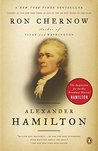
Alexander Hamilton by Ron Chernow

Alexander Hamilton

With the musical Hamilton making it to Austin this year I decided to read the book that inspired it before attending. A hefty tome—731 pages of narrative alone—but I managed to finish the day of the show. Very glad I did this; several friends said the show was hard to follow in places (especially around the actor playing Lafayette and Jefferson; his accent was thick and made him hard to understand even having heard the music before) but I was continually rewarded with recognition of where the songs matched the book. I found the musical to be excellent, and the book as well.

Other than Hamilton being the main author of The Federalist Papers, his visage being on the $10 bill, and his death as a result of a duel with the sitting Vice President at the time, my knowledge of the Founding Father was light on details. It is amazing to see how what he accomplished in only six years as the Secretary of the Treasury still affects us today. He fought for a strong central government and standing military led by the executive branch and for closer ties to Britian. He founded the US Mint, the first national bank, the Coast Guard, and the New York Post. His strong difference of opinion with Thomas Jefferson (who believed in strong state governments and a largely agrarian society) effectively created the political party system that still dominates politics now. Finally, Hamilton also was the first major American politican involved in a sex scandal, which in all likelihood prevented him from becoming President.

One quote that stuck with me: "[Hamilton] viewed 'hypocrisy and treachery' as 'the most successful commodities in the political market. It seems to the be the destined lot of nations to mistake their foes for their friends, their flatterers for their faithful servants." In our current era of amoral politicians, fake news, and idiological echo chambers this still rings true 226 years later. Hamilton was truly an impressive individual.

First Sentence:
Alexander Hamilton claimed Nevis in the British West Indies as his birthplace, although no surviving records substantiate this.

Tuesday, March 19, 2019

Fooling Houdini, by Alex Stone

Fooling Houdini: Magicians, Mentalists, Math Geeks, and the Hidden Powers of the Mind, by Alex Stone

This autobiography describes the journey of an magician from student to professional, while attempting along the way to explain the lasting appeal of the art of illusion. Stone lifts the veil on how a few tricks are done—earning the wrath of several of his brethren—but not so much that the sense of wonder is spoiled. Just reading how a double lift or a blind shuffle are executed doesn't give me the ability to know it when I see it, and certainly not the skill to pull it off myself! I imagine the next time I see a card trick I'll appreciate the hours of practice that make the tick possible as much as the illusion itself.

The cast of characters we meet along the way are what really make this book shine, though. Richard Turner is the world's greatest cardsharp and a blind man whose sense of touch is so sensitive he can tell you how many cards in a pile by running his finger along the edges. Whit Haydn is a reformed con artist that teaches street scams in his School for Scoundrels. Wesley James is called the greatest underground magician of our time, earned a PhD in computer science, and holds court every Saturday at a ratty pizza place in NYC. All these and more... every chapter seemingly introduces a new and fascinating personality.

Being written by a magician it isn't surprising that the craft is held up to high standards, but the level of reverence the subjects gets is way over the top at times. "We'll run out of melodies before we run out of magic." Yeah, no. 😀 Other than that the writing is consistently strong and surprisingly difficult to put down. I learned a lot about illusions, mentalists, Three-card Monte, and card manipulation, and enjoyed every minute of it.

First Sentence:
In the foyer of a hotel in downtown Stockholm, a stunning twenty-two-year-old Belgian girl with dark brown eyes and long chestnut curls had attracted a small crowd.

Friday, June 10, 2016

The Wright Brothers, by David McCullough

The Wright Brothers, by David McCullough

Wilbur and Orville Wright are two men that exemplify what it means to be an American inventor. At a time where most of the world thought heavier-than-air flight was a fool's errand at best, they took their lives in their hands in order to conquer the skies. Neither had a college degree, but Wilbur was a genius and Orville was one of the best mechanical minds of his age. By close examination of birds, careful reading of the work of fellow scientists, and daredevil experimentation they were the first people that safely flew a powered aircraft.

McCullough is an excellent writer and does a great job of telling the story of the brothers lives and their quest. They kept their aircraft and experiments largely private, so even after their initial successes most of the world remained skeptical. After finally holding public demonstrations in Europe and the US proving their accomplishments, the brothers became global heroes. Ironically, their flights to show the world were some of the last they ever made. Wilbur died of typhoid fever less than five years later, and Orville spent the remainder of his life fighting patent infringements and lawsuits. Despite this less than audacious end, the brothers names and accomplishments live on today, with possibly the coolest tribute being the fact that when Neil Armstrong walked on the moon, he carried a swatch of muslin from the wing of the brother's 1903 Flyer.

First Sentence:
In as strong a photograph as any taken of the brothers together, they sit side by side on the back porch steps of the Wright family home on a small side street on the west end of Dayton, Ohio.

Wednesday, June 01, 2016

The B Side, by Ben Yagoda

The B Side: The Death of Tim Pan Alley and the Rebirth of the Great American Song, by Ben Yagoda

My mother loves the theater and my father loved movies, so I grew up with the sounds of Broadway and Hollywood in the house. I'm as familiar with the music of Cole Porter, George M. Cohan, Irving Berlin, George Gershwin, and Duke Ellington as I am Kris Kristofferson, Bruce Springsteen, Paul Simon, Mick Jagger and Keith Richards. The B Side traces American song craft in the early 20th century, including the rise of ASCAP and BMI, the payola scandal, and the shift in prestige from writers to performers. It is sometimes difficult to read a book about music; words are for the eyes, but melody is for the ears (and both nurture the soul). This story often contains long lists of titles, such as "Que Sera, Sera (Whatever Will Be, Will Be)," "I Got Rhythm," "Always," "Stormy Weather," "They Can't Take That Away from Me," "You're the Top," "Sophisticated Lady," "Swinging on a Star," and "It Don't Mean a Thing (If It Ain't Got That Swing)." I find it virtually impossible to see these names and not pause to hear the tune in my head, making this a very long read, albeit an enjoyable one.

One critique is that the author clearly has a distain for rock-and-roll that often seems arrogant. In places this comes across as broad overstatements such as "the pop music of every era offended and mystified the older generation;" while more true than not, I'm certainly an exception as are many of my friends. In other places, the sentiment is imperiously haughty: "But it isn't possible for [songwriters such as Willie Nelson, Brian Wilson, Smokey Robinson, or Paul McCartney] to write a standard—or, as Keith Jarrett found out, it is possible, but really hard." I believe "Yesterday" and "The Tracks of My Tears" are every bit as good as "Night and Day" or "Puttin' on the Ritz." Yagoda's point is that in his opinion rock is less musically and lyrically sophisticated than a standard, but he seems to have deliberately forgotten that beauty is in the eye of the beholder—or in this case, the ear...

First Sentence:
While not quite on the level of a Richard Rodgers, a Cole Porter or an Irving Berlin, Arthur Schwartz was certainly in the top echelon of American songwriters.

Tuesday, May 03, 2016

Mr. Hornaday's War, by Stefan Bechtel

Mr. Hornaday's War: How a Peculiar Victorian Zookeeper Waged a Lonely Crusade for Wildlife That Changed the World, by Stefan Bechtel

I had no idea who William Hornaday was before reading this book. Turns out not only did he found the National Zoo and run the Bronx Zoo, but he was basically the father of the modern conservation movement as well. Hornaday spent his early life traveling the world collecting (and hunting) animal specimens while becoming one of the leading taxidermists in the country. Taxidermy led him to realize that the American Bison had been virtually made extinct; this realization is what pushed him into the forefront of wildlife conservation. His tenacity in the face of hunters, the gun and feather lobbies, and the general apathy of the public led to the first strong national laws protecting animals being passed, and preventing the extinction of the bison and the fur seal.

The author is clearly sympathetic to the cause of wildlife preservation; the tone is one of condemnation towards those not firmly in favor of the conservation movement. He uses terms like "waking up" to describe joining the movement, and calls those not involved the enemy. Hornaday clearly held these opinions, but the same phrases and attitude pervade the narrative even when not quoting Hornaday directly. The biased writing didn't harm the story or make things any less interesting, but I did find it a bit jarring at times. Still, overall this was a well-researched biography about a very interesting man.

First Sentence:
On the fair spring morning of May 6, 1886, an intense-looking young gentleman with eyes that burned like meteors and a jet-black beard vaulted up the stairs of a Pennsylvania Railroad westbound train, which was steaming at the platform in Union Station, near downtown Washington, D.C.

Monday, February 01, 2016

Coreyography, by Corey Feldman

Coreyography: A Memoir, by Corey Feldman

All I really knew about Corey Feldman before reading his memoir was I liked several of his early movies —Gremlins, The Goonies, Stand By Me, and my favorite, The Lost Boys — and like many child stars, he fell into a well-publicized spiral of drug abuse and unfounded arrogance. After reading Coreyography, though, Feldman comes across as a somewhat tragic figure. Yes, drug abuse is self-inflicted and not usually worthy of much empathy, but abusive parents and sexual molestation make the descent into addiction somewhat understandable, an escape from what must have been a horrible reality. His father was largely absent in Feldman's earliest days, leaving him in the care of his untreated schizophrenic mother and a family that looked at him like a paycheck rather than a person. Later, when his father returned to run his career, an assistant hired by his dad began molesting Feldman, starting a cycle of exploitation that lasted for years and included a couple of half-hearted suicide attempts. When Corey turned 15 he legally emancipated himself from his family, but he had already been introduced to cocaine and sadly found himself with his only adult role model being his friend Michael Jackson. Jackson was still a few years out from his own downfall, but still a long way from what I'd call a positive influence. Two failed marriages and a couple of stints in rehab later, Feldman appears to have gotten his life together and the book ends on a hopeful note, Feldman bonding with his son. This is a surprisingly personal and revealing memoir; I'd expected braggadocio and rationalizations, but instead got an honest look back over an amazingly unhappy life.

First Sentence:
I am three years old, sitting at the small round breakfast table in our tiny kitchen, eyeing a half-open box of cereal.

Tuesday, January 19, 2016

So, Anyway..., by John Cleese

So, Anyway..., by John Cleese

John Cleese is hilarious. Anyone that has seen him perform (Monty Python, Fawlty Towers are the best known) has seen his genius, but this memoir shows his true talent is writing. He covers his life from his earliest days right up to the forming of Python; while this is fascinating, it was a bit disappointing as well. Of course I'd love to hear the stories behind one of the funniest shows I've ever seen, but understand that could probably fill an entire book by themselves and that wasn't the issue. The disappointing part was the hints at his life after 1969 that we don't get to see. For instance, Cleese mentions three wives, but is still married to his first throughout the text. That nit aside, this is still a great read.

Cleese has always been known for farce, but I always found his humor very sharp as well, and his wit and wisdom come off well here. I especially appreciated his take on religion: "All the vital questions have been dumped in favour of half-baked, po-faced rituals which are basically a form of middle-class rain dance. Still, it did give me the chapel scene in The Meaning of Life." Cleese nails political correctness as well, saying it "may have started as a kind intention, but was soon hijacked and taken ad absurdum by a few individuals without any sense of proportion—which means, by definition, that they are without any sense of humour either." He believes that if political correctness existed in his early career at the same level it does today, much of the comedy he wrote wouldn't have seen the light of day. Makes you wonder how many laughs we are missing now because comedians are hampered by society's race to mental austerity...

First Sentence:
I made my first public appearance on the stairs up to the school nurse's room, at St. Peter's Preparatory School, Weston-super-Mare, Somerset, England, on September 13, 1948.

Sunday, April 26, 2015

Tough Sh*t, by Kevin Smith

Tough Sh*t: Life Advice from a Fat, Lazy Slob Who Did Good, by Kevin Smith

I like Kevin Smith's work; from Clerks to Green Arrow to Daredevil I find him both clever and funny. There are several autobiographical stories in Tough Sh*t—many of which are covered in more detail elsewhere—such as Smith's feud with Bruce Willis and the arrogance of Southwest Airlines. In and around the vignettes Smith weaves in advice for how to approach life. The guidance is often odd, such as where he compares the odds of a single sperm fertilizing an egg and creating a human being to self-actualization: "Remind them they've already beaten the odds, so the existence that follows is merely a victory lap to do with as they please." A phrase I found less specious and much more thoughtful occurs a little later in the chapter: "In the face of such hopelessness as our eventual, unavoidable death, there is little sense in not at least trying to accomplish all your wildest dreams in life." Smith's trademark humor and irreverence come through loud and clear throughout this short but entertaining read.

First Sentence:
I am a product of Don Smith's balls.

Sunday, March 15, 2015

The System, by Jeff Benedict and Armen Keteyian

The System: The Glory and Scandal of Big-Time College Football, by Jeff Benedict and Armen Keteyian

I love college football. My wife and I have had season tickets for the Longhorns for over 20 years (although with the introduction of the poorly named Loyalty Program that may not last much longer) and I don't remember the last fall Saturday that wasn't spent watching the battle of the gridiron. The System is about the parts of the game not covered by the box scores, though: the boosters, the politics, the crime, and of course, the money.

Benedict and Keteyian don't have a single narrative, but instead structured the book like a series of essays. The exception to this is the tale of Mike Leach, from his decision to ignore his law degree in order to pursue football, to being the head coach of Texas Tech, to the idiocy of Craig James and his son causing Leach to lose that position, to his resurfacing as the leader of Washington State. (I always liked Leach and thought he was a great addition to the Big XII, even if his Red Raiders did stop the Longhorns from going to the National Championship in 2008.) Other chapters covered Don King, who ran the Yellow Rose strip club in Austin and offered VIP service to athletes (saying "I've done more for recruiting at UT than Mack Brown"), 17 year old Jane Brown at BYU who was raped by freshman football players (who were so new to campus they actually hadn't yet played in a game), the NCAA itself and its epic bungling of the Miami booster case, and essays titled "Crime and Punishment" (subtitled "SEC leads the nation") and "Gameday" ("The genius of ESPN").

The System provides a look at a variety of issues in college football, but doesn't attempt to provide any solutions. Challenges to the status quo like the Kessler antitrust suit, unionization, player stipends, and students rights to their own image aren't mentioned at all. This lack of detail and analysis keeps this book from being a true exposé, but it is still a great primer for the aspects of the sport not seen on College Gameday.

First Sentence:
On Saturday afternoons in the fall of 1981 the roar of the crowd would echo across campus every time BYU scored a touchdown.

Monday, March 09, 2015

As You Wish, by Cary Elwes

As You Wish: Inconceivable Tales from the Making of The Princess Bride, by Cary Elwes

Who doesn't like The Princess Bride? Both the book and the movie are top notch, classics that can be enjoyed generation after generation. The movie starred (among others) Cary Elwes, one of my favorite actors—right up there with Nathan Fillion, Bruce Campbell, and Cary Grant. Now Elwes has written a memoir of the making of the movie, and it is a truly fun read.

When The Princess Bride was being filmed, Elwes was just starting his acting career and was unbelievably nervous at being cast by Rob Reiner and expected to share the screen with such luminaries as Billy Crystal, Carol Kane, Christopher Guest, Chris Sarandon, Mandy Patinkin, and a host of others. One of the great things about this book is that these actors all contribute anecdotes to Elwes memories, making for a very well-rounded story. For instance, as inconceivable as it sounds, Wallace Shawn made the entire movie convinced he was about to be fired. His agent told him Danny DeVito was the first choice for the role and felt he never could measure up!

After reading this I felt compelled to rewatch the movie, and found it as enjoyable as ever. If anything, reading As You Wish made it even more so! Great book.

First Sentence:
The note simply read: IMPORTANT.

Search This Blog