Showing posts with label 18th century. Show all posts

Sunday, June 02, 2019

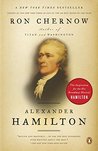
Alexander Hamilton by Ron Chernow

Alexander Hamilton

With the musical Hamilton making it to Austin this year I decided to read the book that inspired it before attending. A hefty tome—731 pages of narrative alone—but I managed to finish the day of the show. Very glad I did this; several friends said the show was hard to follow in places (especially around the actor playing Lafayette and Jefferson; his accent was thick and made him hard to understand even having heard the music before) but I was continually rewarded with recognition of where the songs matched the book. I found the musical to be excellent, and the book as well.

Other than Hamilton being the main author of The Federalist Papers, his visage being on the $10 bill, and his death as a result of a duel with the sitting Vice President at the time, my knowledge of the Founding Father was light on details. It is amazing to see how what he accomplished in only six years as the Secretary of the Treasury still affects us today. He fought for a strong central government and standing military led by the executive branch and for closer ties to Britian. He founded the US Mint, the first national bank, the Coast Guard, and the New York Post. His strong difference of opinion with Thomas Jefferson (who believed in strong state governments and a largely agrarian society) effectively created the political party system that still dominates politics now. Finally, Hamilton also was the first major American politican involved in a sex scandal, which in all likelihood prevented him from becoming President.

One quote that stuck with me: "[Hamilton] viewed 'hypocrisy and treachery' as 'the most successful commodities in the political market. It seems to the be the destined lot of nations to mistake their foes for their friends, their flatterers for their faithful servants." In our current era of amoral politicians, fake news, and idiological echo chambers this still rings true 226 years later. Hamilton was truly an impressive individual.

First Sentence:
Alexander Hamilton claimed Nevis in the British West Indies as his birthplace, although no surviving records substantiate this.

Saturday, May 02, 2015

Paris: The Novel, by Edward Rutherfurd

Paris: The Novel, by Edward Rutherfurd

This is the history of Paris told through they eyes of six fictional families between 1261 and 1968. The types of families are well chosen to give a cross section of society through history: the de Cygnes are aristocrats and royalists, the Le Sourds are socialists and revolutionaries, the Gascons are craftsmen and laborers, the Renards are Protestants, the Blanchards are Catholics, and the Jacobs are Jewish. These characters are injected into and around a huge number of important events, such as the Paris Commune and the Terror, the construction of the Statue of Liberty and the Eiffel Tower, the Avignon Papacy, Vichy France, the Dreyfus Affair and the rocky history of Jews in France, and Catholicism versus Protestantism and the Edicts of Nantes and Fointainbleau. Each chapter is set in a different era but they don't appear in chronological order, instead bouncing from 1875 to 1462 to 1907 and so on. As the narrative follows the same families through successive generations this can be somewhat confusing at times, especially as some use the same given names over and over—for example, there are three separate Roland de Cygnes that take the stage in various eras. This drawback is minor though, and doesn't dramatically detract from what is overall a compelling and illuminating story.

First Sentence:
Paris.

Saturday, January 25, 2014

George Washington's Secret Six, by Brian Kilmeade and Don Yaeger

George Washington's Secret Six: The Spy Ring That Saved the American Revolution, by Brian Kilmeade and Don Yaeger

This is a pretty interesting book about the Culper Spy Ring which was active in New York during the American Revolution. I didn't know much about the ring other than through pop culture references in Y: The Last Man and White Collar and quite enjoyed learning more about it, and the major impact on the war the spies brought about. The biggest (but not only) coup the ring accomplished was providing key intelligence that eventually prevented Benedict Arnold from turning West Point over to the British. Truly fascinating.

This is an easy read, with short chapters and just over 200 pages written at maybe a middle-school level. There is a lot of dialog here, capturing conversations between characters that couldn't possibly be known today, making this an odd blend of fiction and non-fiction. Overall this certainly gets a thumbs up as a basic introduction to the Culper Ring, and a good set of references in the back for digging in further.

First Sentence:
The execution of Nathan Hale on September 22, 1776, was the lowest point in a month of low points for General George Washington.

Wednesday, April 27, 2011

Treasure Island, by Robert Louis Stevenson

Treasure Island, by Robert Louis Stevenson

I read Kidnapped when in grade school and didn’t really care for it; I somehow decided that all of Stevenson’s works would be similar and so didn’t pick up Treasure Island until just now. What a mistake! Interesting and suspenseful, Stevenson’s story starts out with the arrival of a mysterious seaman and and doesn’t slow down until it’s finished. The adventure is the prototypical quest: a mysterious treasure map is discovered, and the ensuing hunt leads to mutiny and piracy on the high seas. The narrator is (save for two odd chapters right in the middle of the book) young Jim Hawkins and while his telling of the tale is fairly straightforward, the underlying coming-of-age tale is interesting in its own right. Jim’s father dies in the early chapters, and he has several different potential role models, including Long John Silver. At first the pirate presents himself as an honorable man, but as the story unfolds Jim begins to see Silver for who is really is and lets his morals guide him to the truth.

This is clearly aimed at younger boys—Jim’s mother is the only female character and she is out of the picture after just a few chapters. The writing is straightforward and uncomplicated, but at the same time quite effective and descriptive. Take this description of Billy Bones, the pirate who initially possesses the map: “A tall, strong, heavy, nut-brown man, his tarry pigtail falling over the shoulders of his soiled blue coat, his hands ragged and scarred, with black, broken nails, and the saber cut across one cheek, a dirty livid white.” The imagery is powerful and makes the character easy to visualize, but the simple words are comfortable for readers of nearly any age. The plot isn’t complicated either, but amazingly compelling—I had a difficult time putting it down! A true classic, I thoroughly enjoyed this novel.

First Sentence:
Squire Trelawney, Dr. Livesey, and the rest of these gentlemen having asked me to write down the whole particulars about Treasure Island, from the beginning to the end, keeping nothing back but the bearings of the island, and that only because there is still treasure not yet lifted, I take up my pen in the year of grace 17— and go back to the time when my father kept the Admiral Benbow inn and the brown old seaman with the sabre cut first took up his lodging under our roof.

Wednesday, February 17, 2010

Les Liaisons Dangereuses, by Pierre Choderlos de Laclos

Les Liaisons Dangereuses, by Pierre Choderlos de Laclos

The decadence of the French aristocracy is legendary, and Les Liaisons Dangereuses is an excellent illustration of this. The two main characters take delight in destroying people and reputations using the timeless tool of seduction. There is no remorse or hesitation expressed by the villains; in fact, their behavior is justified in their minds, as in this defense of adultery: “Either you have a rival or you have not. If you have one, you must please, in order to be preferred to him; if you have not, you must still please, in order to avoid having one. In both cases the same conduct is to be observed: why, therefore, torment yourself?”

French is said to be the language of love, though, and that reputation is well-deserved if this book is a typical example. “It was when I saw you that I saw light; soon I understood that the charm of love sprang from the qualities of the soul; that they alone could cause its excess, and justify it. I felt, in short, that it was equally impossible for me not to love you, or to love any other than you.” Finding such a poetic depiction of love being issued by a debauched aristocrat brought home how duplicitous these characters truly are. The ending is a bit abrupt but the lesson is clear: immoral behavior is punished in this world and not the afterlife; or in a more colloquial way, what goes around comes around.

First Sentence:
You see, my dear friend, that I keep my word to you, and that bonnets and frills do not take up all my time; there will always be some left for you.

Sunday, October 25, 2009

The First American, by H.W. Brands

The First American: The Life and Times of Benjamin Franklin, by H.W. Brands

Benjamin Franklin was a scientist, inventor, philosopher, author, scholar, businessman, and diplomat—a true Renaissance man. I knew the highlights (creator of the first public library and first fire department, inventor of bifocals and the Franklin stove and the lightning rod, one of the drafters of the Declaration of Independence, Ambassador to France, ...) but was still surprised at how much else there was to the man. He was an accomplished musician and composer and even invented an instrument: the armonica. He was one of the founders of the University of Pennsylvania, organized the Pennsylvania Militia, and established the first hospital in North America. He even charted and named the Gulf Stream during his many Atlantic crossings. Frankin had a wry sense of humor as well; Poor Richard’s Almanack contains some of his funniest work, with my favorite being the aphorism, “Force shits upon reason’s back.”

Despite being known as one of the fathers of the Revolution, originally Franklin believed that America should remain a part of Britain but governed separately (like Canada) instead of directly by Parliament. As he spent more and more time in England he became disgusted by the corruption of the British government and after a public humiliation he changed his beliefs. “The essence of the Revolution was the triumph of virtue over vice.” I was saddened to read about how venal Parliament was at this point in history; the descriptions could easily apply to our American government of today. Regardless, the examination of Franklin’s politics were the most interesting parts of the book. While no McCullough, Brands has written an excellent book.

First Sentence:
Cotton Mather was the pride of New England Puritanism.

Wednesday, June 03, 2009

The Secret History of the Pink Carnation, by Lauren Willig

The Secret History of the Pink Carnation, by Lauren Willig

I read the other day that Brad Meltzer said it is okay for men to read chick-lit so I’m not embarrassed at all to say I loved The Secret History of the Pink Carnation! Using the device of a book-within-a-book, this is set in both present day and in 18th century Europe in a world where the Scarlet Pimpernel was a real secret agent. We are introduced to Eloise, a modern grad student investigating the successors to the Pimpernel: the Purple Gentian and the Pink Carnation. She is interesting, but the historical figures are where the book shines.

While a lot of fun, this doesn’t even try to be historically accurate. The women from the 18th century are sassy, well-educated, and would fit in to today’s society without any trouble; the men from all era are generally arrogant cads but eventually revealed to have hearts of gold. The inner monologues are quite modern and funny: “Kissing Amy. Bad idea. What the devil had he been thinking? He hadn’t been thinking at all; that was the problem. At least, he hadn’t been thinking with any part of him that worked in a logical manner.” Another bit I enjoyed: “Like? What an incredibly inadequate word like was. To say that he liked the idea of Amy dressed up as a dancing girl would be like saying Midas liked gold, or Epicurus liked food, or Miss Gwen liked poking her parasol at people.” And from the modern era, an affliction that Merck will surely have a pill for soon: “Unfortunately, I knew exactly what I was suffering from. LIPID (Last Idiot Person I Dated) syndrome: a largely undiagnosed but pervasive disease that afflicts single women.” Funny stuff.

Comedy, historical fiction, and contemporary chick lit are an interesting mix. While I wouldn’t call this overly intellectual, I would call it fun. I think I’ll try the next few in the series and see if they hold my interest.

First Sentence:
“...The city of your birth awaits your return.”

Saturday, March 22, 2008

The Scarlet Pimpernel, by Baroness Orczy

The Scarlet Pimpernel, by Baroness Orczy

Set during the French Revolution, The Scarlet Pimpernel tells the tale of a band of Englishmen helping doomed French aristocrats escape the guillotine. The identity of the leader of the Englishmen is a mystery, known only by the pseudonym “The Scarlet Pimpernel.” The revolutionary leadership would give anything to capture the Pimpernel, and one agent thinks he finally has a lead...

I loved this novel! I remember watching the old Leslie Howard movie as a kid and being captivated. The book grabbed me in much the same way—once I started I couldn’t put it down! Clearly the forerunner to Zorro, James Bond, and Batman, this story has it all: disguises and secret identities, espionage and betrayals, romance and rescues, and heroic derring-do. With my love of comic books and adventure novels, I can’t believe I waited so long to read this. Orczy wrote at least ten sequels to her most famous novel; I’ll be looking for others soon!

First Sentence:
A surging, seething, murmuring crowd of beings that are human only in name, for to the eye and ear they seem naught but savage creatures, animated by vile passions and by the lust of vengeance and hate.

Saturday, July 28, 2007

John Adams, by David McCullough

John Adams, by David McCullough

I’ve always been interested in the early days of our country, but until now have read mostly historical views of the times such as The Federalist and Anti-Federalist Papers and Witnesses at the Creation and not much about the lives of the people involved. Most of what I knew about Adams was vague snippets from high school history: a signer of the declaration, the first ambassador to the Court of St. James, and our second President. My wife and I recently saw a local performance of the musical 1776 and I realized how shallow my understanding was. I’d loved McCullough’s Truman, so I picked up his John Adams hoping for a similar experience. This is the second book for which McCullough has won a Pulitzer Prize and the second that I thoroughly enjoyed.

Much of the biography is told in the words of the subject: excerpts from letters written by Adams, his wife Abigail, or Thomas Jefferson appear on nearly every page. (To see how much insight we gain by looking at period correspondence is humbling; today email has clearly taken the place of hand-written letters and I suddenly think history will be poorer for it.) I was very surprised to see how integral Abigail was in John’s decision making process; I’ve always had the impression that the opinions of women at that time were considered trifling at best, but this union appears to be a true partnership, more like I’d expect to find today. McCullough clearly believes John Adams would never have achieved his success without the guidance of Abigail, and he makes an excellent case.

One frustrating thing for me was trying to keep all the players straight. I’m not sure if it was unique to the Adams family or simply the way it was done back then, but many people were given the same name as their father or mother. Three John Adamses, two John Quincy Adamses, and four Abigails in just four generations, and not a single Senior, Junior, or nickname in the bunch! The author does an admirable job of limiting the confusion, but at times it was hard to follow some of the passages. Overall, though, this is a minor quibble in what is otherwise a compelling read.

First Sentence:
In the cold, nearly colorless light of a New England winter, two men on horseback traveled the coast road below Boston, heading north.

Search This Blog