Showing posts with label united states. Show all posts

Wednesday, August 05, 2020

Barrel-Aged Stout and Selling Out, by Josh Noel

Barrel-Aged Stout and Selling Out: Goose Island, Anheuser-Busch, and How Craft Beer Became Big Business

This is more than just the history of Goose Island Beer Company; this is the history of how Anheuser-Busch went from ignoring craft beer to trying to kill craft beer to (somewhat) embracing craft beer.

Goose Island was founded in 1988 and fairly quickly established themselves as a solid brewer in Chicago. In 1992 they basically invented the bourbon barrel-aged movement with their Bourbon County Stout and placed themselves among the leaders of the growing craft beer movement. Around this same time the explosive growth in craft beer started cutting into the profits of Anheuser-Busch and MillerCoors so they did what any near-monopoly does: they tried to kill their competitors. This cold war between large and small brewers continues through today, but in 2011 a major shift happened: AB InBev bought Goose Island outright. This was seen as traitorous by the craft industry and the Brewers Association which governs craft reacted by officially defining craft beer as "small, independent, and traditional" which meant that Goose Island went from a leader in the industry to an outsider overnight.

Noel does a good job of telling the story and showing the logic behind the decisions of the major players. He is fairly even-handed (if anything, he may have underplayed the outrage and sense of betrayal that occurred when the purchase occurred) and accurately noted that the craft beer community breaks down into two camps: people that care about how the beer tastes and people that care about who profits from the sales. (Personally I feel more of a kinship with the first group, but certainly understand the animosity towards "big beer" and their bully pulpit.) This is a fascinating and entertaining narrative, and Noel describes it well. His conclusion is spot-on, capturing the bittersweet result of the war. "Craft beer won: it forced the biggest beer company in the world to change. Craft beer lost: it had been commandeered by the biggest beer company in the world."

First Sentence:
On a Thursday evening in 1986, as a spring storm pounded the Dallas-Ft. Worth airport, John Hall sat in an airplane on the rain-glazed tarmac and did something he would recount for the rest of his life.

Tuesday, July 21, 2020

A Chain of Thunder, by Jeff Shaara

A Chain of Thunder (Civil War: 1861-1865, Western Theater, #2)

This book tells the story of the Campaign for Vicksburg during the Civil War. I've visited the National Military Park there a couple of times and always find it both fascinating and moving. Shaara does a good job of providing varying frames of reference from both sides of the battle, generals and enlisted men alike. There are several maps throughout giving a feel for the movement of troops, which is nicely juxtaposed with the southern civilian viewpoints who were only told their position was impregnable and chose to believe it.

This is clearly a well-researched novel, with detail after detail about the quality of life as well as the military strategies. I was surprised to find that anti-vaxxers were not a recent idiocy but were alive and well in the 19th century. "It amazed Bauer that so many in the town, and in the army, had responded instead with outcries against the vaccinations that seemed born of nothing more than superstition." With all this detail, though, there is a surprising lack of what life was like for the slaves in Vicksburg—none of the narrators were Black. When white civilians during the siege were reduced to eating dogs and rats, what the slaves ate isn't stated. Considering this was a war over slavery, this lack of insight hurts the overall narrative.

It was strange reading a novel about the Civil War during a time where it feels our country is splintering along similar political lines, if not physical ones this time. On the North side Grant and Sherman fought to hold the United States together. On the South, Pemberton fought out of loyalty to his Virginia-born wife rather than dedication to the Confederacy. The Northern soldiers fought for duty, the Southern desperate to maintain their way of life. Both sides are depicted fairly nobly, and the institutional racism at the root of the conflict isn't a part of the story. Makes you wonder how the raging racists running Washington will be depicted in literature a century from now.

First Sentence:
The ball was a glorious affair, the Confederate officers in their finest gray, adorned with plumed hats and sashes at their waists.

Friday, April 24, 2020

Chicago, by David Mamet

Chicago: A Novel of Prohibition

Mamet is known for his dialogue (Alec Baldwin's monologue in Glengarry Glen Ross is maybe the best 7 minutes of film in existence) where characters often interrupt to finish each other's sentences, punctuated with obscenities. Chicago lives up to this reputation, filled with mobsters, whores, and reporters in a post-WWI era Windy City. Sadly, the writing overshadows the plot with the result feeling more like a badly edited short story stretched out to novel-length.

Nothing really happens in the first half of the book, and then another third has the "hero" trying to drink himself to death. The conversations are quite good and occasionally insightful ("Why do we lie? To obtain something from our listener.") and the individual scenes often are as well (I especially liked the discussion of why you shouldn't carry a gun or a flashlight when cracking a safe) but they are only tenuously connected and thinly strung together. It almost feels like a series of vignettes featuring Chicago, but the characters and settings don't change enough to pull this off. If you like the glib pen of Mamet this may hold your interest, but if you are looking for a gritty tale of mobsters during prohibition maybe check out Dennis Lehane's Live by Night instead.

First Sentence:
Parlow and Mike sat quiet in the duck blind.

Sunday, March 01, 2020

Three Californias, by Kim Stanley Robinson

Three Californias: The Wild Shore, the Gold Coast, and Pacific Edge

This is a collection of three novels depicting three radically different futures of Orange County, California. None of these futures is particularly appealing, but each shows fairly effectively that no matter what, life goes on. Besides the setting, the only commonalities are an archeological dig giving a quick look at how we get from our world to theirs, a severe reduction in nudity taboos, and a man named Tom Barnard, a wise elder serving as a mentor to each of the three young protagonists.

The Wild Shore is set after a Russian terrorist attack that saw thousands of neutron bombs all set off at once in major cities across the US. Life wasn't exterminated in North America, but Russia and Japan keep the survivors isolated and restrict any serious recovery. The plot mainly follows three groups of people: a community of peaceful farmers and fishermen, a somewhat militant group that wants to restore the United States, and a group of scavengers that collaborate with the foreign oppressors for their own gain. The most disturbing group here was the militants (living in the shockingly large city of San Diego, almost 2000 people strong); the book was written in 1984 but these jingoist patriots want to "make America great again" which has a very uncomfortable ring to it today.

The Gold Coast describes a world where our current culture of hedonistic sprawl continues on, resulting in widespread casual drugs, self-driving cars, multi-level freeways, and an ever-growing military-industrial complex. Unlike the first and third novels, nature here has basically vanished. "The county was crowded, they needed that 66,000 acres [of national forest] for more homes, more jobs, more profits, more cars, more money, more weapons, more drugs, more real estate, more freeways! And so that land was sold too." Fairly sobering, as that sadly seems the path we are following as a country.

The last book, Pacific Edge, describes what happens when the world suddenly takes climate change very seriously and transforms into an ecology-first society. It seems like a utopia at first, but as the tale progresses an oppressive socialistic government starts to be revealed, with politics and corporate greed still alive and well. The main conflict is over the potential commercial development of the last remaining bit of wilderness in the area; contrasted with the multi-level freeways and near-total lack of vegetation of the previous novel it makes the protective group seem hugely entitled.

All three were fairly interesting, but if they hadn't been bundled into the same physical book I'm not sure I'd have read them all. The Wild Shore was easily my favorite, showing how quickly history and culture are mangled and forgotten: Shakespeare being a great American from the state of England, for instance. Pacific Edge was probably intended to be a brighter future after the darker path of the first two, but a zoning fight in a liberal tree-hugging utopia simply doesn't make for a believable or compelling story. Taken together, though, they make for thought-provoking reading, and one can easily see the germs of what became the wonderful Mars Trilogy in Robinson's writing.

First Sentence (from the forward):
Triptych: a medieval painting made of three separate panels hinged together, so that as well as sharing a subject or a theme, the pictures can be turned to face each other, to start a silent conversation with each other.

Thursday, February 13, 2020

The Nickel Boys, by Colson Whitehead

The Nickel Boys

Set in the American South of the 1960s, this is a book with Jim Crow at its heart. Racism and unfairness saturate each page, coupled with sadness and misery, cruelty and inequity. Amazingly, the spirit of the main two boys keeps the story from becoming depressing, and in fact, was quite an engaging and even uplifting read.

Based loosely on the real-world Dozier School for Boys, a reform school in Florida that was violently abusive to its charges for virtually all of the 111 years it was open, The Nickel Boys tells the story of Elwood Curtis and his friend Turner. While violent, the dignity and dedication to survival the boys possess prevail over the casual racism shown by not just the craven staff, but the rest of the world in general. "They had whipped Elwood. But he took the whipping and he was still here. There was nothing they could do that white people hadn't done to black people before, were not doing at this moment in Montgomery and Baton Rouge, in broad daylight on a city street outside Woolworths." (Sadly, racism hasn't been vanquished in the decades since segregation fell out of favor, but simply driven underground until the recent rise of the alt-right and its seeming embrace by the Republican Party. It is hard not to read this book and see the parallels to what is happening today in migrant detention camps.)

The surprisingly short book is broken into three parts: the first two parts are presented sequentially and in a straightforward manner, but the third starts jumping backwards and forwards in time causing the narrative to be a bit hard to follow. This change in style makes sense once reaching the epilogue, but until then the chapter breaks can be a bit jarring. Entertaining seems an odd word to use for such a bleak plot, but I did truly enjoy reading this thought provoking novel.

First Sentence:
Elwood received the best gift of his life on Christmas Day 1962, even if the ideas it put in his head were his undoing.

Monday, December 09, 2019

A Civil War: Army vs. Navy, by John Feinstein

A Civil War: Army vs. Navy - A Year Inside College Football's Purest Rivalry

I'm an unapologetic Longhorn football fan, but I've always been fascinated by the Army-Navy rivalry. It is the only game attended by the entire student body of both schools, and even when the teams are awful (which sadly is pretty normal these days) the game is exciting and the spectacle captivating. I love watching this game each year, the only non-Texas game that is appointment viewing for me. So when I spotted this book in a discount bin about the 1995 Army and Navy seasons, culminating in their clash at the end, I snatched it up and saved it to read just before this year's bout. Unlike what many of the refs did during their respective seasons, that was a good call.

Feinstein is known more for his books on basketball and golf, and it shows a bit here: his college football knowledge seems a bit lacking in places. For instance, he claims the Army-Navy game is the best rivalry in the country; it is certainly in the top echelon, but what about Harvard-Yale? The World's Largest Cocktail Party? The Battle for the Axe? Michigan-Ohio State? The Iron Bowl? Or the greatest of them all, the Red River Showdown? Similarly with stadiums, he calls Notre Dame Stadium "college football's most famous stadium." Um... how about the Rose Bowl, or Michigan Stadium, or Tiger Stadium? Even the name of the book is a bit odd; the Civil War is what the annual Oregon-Oregon State game is called; nothing to do at all with Army-Navy.

That said, this is a wonderful book and the Army-Navy game is one of the treasures of college football. Feinstein does a great job of ping-ponging between the Army and Navy squads as their year progresses, becoming a biographer of sorts for a handful of players and coaches on each team. Along the way a lot of the traditions and history of the schools and squads are told giving more than a glimpse into what life at a service academy must be like. Even with Feinstein's hyperbole and occasional pretentiousness this was a fantastic book and I look forward to watching the game on Saturday!

First Sentence:
Almost thirty minutes after the last play of his college football career, Jim Cantelupe, still dressed in the black uniform with the gold number 22 on the back and front, walked down a dank, winding hallway in the bowels of Philadelphia's Veterans Stadium.

Tuesday, November 05, 2019

The Atomic City Girls, by Janet Beard

The Atomic City Girls

During WWII, Oak Ridge was established as one of the main sites of the Manhattan Project. The facility was sprawling, springing up in a largely unpopulated area seeming overnight to house and employ 30,000 workers—almost none of whom had any idea what they were trying to build. This little-known setting serves as the backdrop for several (barely) intertwining stories of life, love, and growing up.

Despite the title, the narrative largely follows only four people, two women and two men: Sam, a Jewish physicist who is a key player in developing the bomb, June, a high-school graduate finding her way in the world, Cici, a gold digger searching for a husband, and Joe, an African American construction worker. Sam and June are the main focus, falling into an affair fairly quickly. Joe has the most interesting arc, with the horrible treatment of blacks at the time and the varying attitudes of everyone ranging from hostility to acceptance. Cici does have her own storyline, but largely serves as a foil to June, going from friend to enemy fairly dramatically.

While the plots are thin and characters are largely one-dimensional, the setting is what makes this a pretty good read. There are actual photos interspersed of Oak Ridge at the time which really helps set the mood. While reading I found myself going to the web and looking up stories and information about the plant; I probably spent as much time doing that as reading the novel! If you are looking for an historical fiction tale that sheds light on a new era this is a solid (if pedestrian) choice.

First Sentence:
The news that June's grandfather was being evicted had come from her older sister Mary, who worked in town at Langham's Drug Store.

New York Fantastic, edited by Paula Guran

New York Fantastic: Fantasy Stories from the City that Never Sleeps

This is an unusual and uneven collection of short stories, each with a heavy fantasy element and all set in New York City. In one memorable (but odd) story the city itself is a character; "The Tallest Doll in New York City" by Maria Dahvana Headley tells of a time when the Chrysler Building takes a walk with the Empire State Building. My favorite tale was "Shell Games" by George R. R. Martin; it details the origin story of the hero named The Great and Powerful Turtle from the Wild Cards series, a favorite from my college days. Another great one is "Priced to Sell" by Naomi Novik following real estate brokers trying to find housing for vampires and other monsters. Other authors I like that have stories here include Elizabeth Bear, Peter Straub, and N.K. Jemisin. Others aren't very good though; Seanan McGuire's "Red as Snow" and Peter S. Beagle's "The Rock in the Park" are especially mundane. Despite the irregularity of quality, I expect there is something in here for everyone to enjoy.

First Sentence (from the introduction):
New York City is a very real place, but no one can deny it is also somewhere magic occurs and all sorts of fantastical things happen.

Tuesday, September 17, 2019

The Last Sheriff in Texas, by James P. McCollom

The Last Sheriff in Texas

This book chronicles the changes the state of Texas underwent after WWII, moving from mostly rural to mostly urban, and seeing the cowboy fade from a real profession to a role in the movies. Sheriff Vail Ennis of Bee County was a violent, uncompromising man with a flair for violence—he shot and killed eight men while in office between 1944 and 1952. Johnny Barnhart was raised in Bee County, but while attending the University of Texas uncovered a passion for civil rights that set him apart from his conservative neighbors. These two icons clashed during the election of 1952, forcing citizens to choose between frontier justice and law and order, changing Texas politics forever.

The story is told primarily via interviews and reminiscences with a healthy amount of historical context thrown in for good measure. I found it to be compelling (if very repetitive), although I can easily see how someone that isn't familiar with life on the Texas Costal Plain might find it slow and meandering. The book is part true crime, part political history, part biography, and part memoir resulting in a style that is a bit offbeat. On one page there will be a excerpt from a newspaper article, and on the next conversational dialogue from people long since dead. I found this see-sawing between fact and fabrication hard to get used to at first, but eventually settled down and enjoyed the story.

First Sentence:
The man who shot the sheriff was Roy Hines, thirty-four, ex-con, a grifter on his way from Oklahoma to Mexico.

Sunday, August 25, 2019

The Handmaid's Tale, by Margaret Atwood

The Handmaid's Tale

This novel tells the story of a near-future revolution that replaces the United States with the Republic of Gilead, an oppressive fundamentalist Christian theocracy. We are vividly shown the dark side of religion, what happens when those beliefs are taken to a tyrannical extreme: women are forbidden to own property, vote, read, or write; homosexuality and heretical ideas are punished by death. Basically, what Vice President Mike Pence would call an ideal world.

I found the book difficult to read not because of the disturbing content, but due to the stilted language: "I walk around to the back door, open it, go in, set my basket down on the kitchen table." The choppy writing gave me fits for some reason; I had to re-read sections often because I wasn't parsing the prose properly. Given the environment I was expecting to discover that the author was secretly writing down her thoughts to explain the odd syntax, but in the epilogue we learn the author recorded everything on tapes—meaning the writing should have been more fluid, not less.

I would have liked to see more about the mechanics of the revolution (an ongoing war is mentioned multiple times, and at one point the Republic of Texas is shown to be an independent country again) but given the author is a woman and therefore forbidden from knowledge and news the lack of detail makes sense. Regardless, this is a thought provoking read and should be required reading for anyone interested in a "fair and balanced" world.

First Sentence:
We slept in what had once been the gymnasium.

Saturday, July 13, 2019

Ghost in the Wires, by Kevin Mitnick with William L. Simon

Ghost in the Wires: My Adventures as the World's Most Wanted Hacker

Subtitled "My Adventures as the World's Most Wanted Hacker" this is a rollicking story of how Kevin Mitnick became a computer break-in artist, how he eluded the FBI for years, and how he was eventually caught. It is a fascinating read; he starts by breaking into the phone company to make free long distance calls, and continually improves his skills and systems access until he can control tapping any phone. He stole thousands of credit card numbers and personal details, and created multiple false identities to evade the FBI when they caught on. Mitnick claims he never used any of these details for personal gain, but instead simply approached hacking as a problem to be solved—he wasn't interested in the credit cards, just the challenge of obtaining them.

Mitnick goes into great detail about how he got into so many systems, and that detail is fascinating. Most of his entry points weren't purchased on the dark web, but obtained through fairly straightforward social engineering. We hear all the time about how we are never supposed to give out passwords over the phone or provide detailed answers for people we don't know, but over and over again Mitnick does exactly that. For example, he'd call someone and ask if they were authorized for a particular system, and when they said yes he'd reply with something like, Your password is '0128.'" The person on the other end would respond, "No, no, no. My password is '6E2H." And just like that, Mitnick had another password. Simple.

Mitnick comes off as antisocial, narcissistic, and arrogant which is a bit surprising as he is the author; I'd expect he'd tone down his disdain for authority or contempt of social mores. He shows a staggering lack of remorse, and his regrets all center around him getting caught. While not very likable, his story is compelling and hard to put down. If you are in any way interested in cyber crime or the dark side of technology, this is a must-read story.

First Sentence:
My instinct for finding a way around barriers and safeguards began very early.

Monday, June 24, 2019

The Last Policeman, by Ben H. Winters

The Last Policeman (The Last Policeman, #1)

In 2011 scientists discover a huge asteroid that is going to hit the earth in about a year, ending life as we know it. As the world unravels with this news (economic panic and massive inflation, a staggering rise in suicide and cultism, people walking away from all responsibility) a young detective discovers what he believes is a murder, but is having a difficult time getting anyone to care. The mystery is a by-the-numbers affair, following one lead to the next, but what sets it apart is the hopelessness and apathy of pretty much everyone but the detective, Hank Palace. The secondary plot involves Palace's sister and a supposed government conspiracy, but that is left largely unresolved and I imagine fodder for future books. A fascinating setting, but I'm not sure I liked it enough to read the next in the series.

First Sentence:
I'm staring at the insurance man and he's staring at me, two cold gray eyes behind old-fashioned tortoiseshell frames, and I'm having this awful and inspiring feeling, like holy moly this is real, and I don't know if I'm ready, I really don't.

Sunday, June 02, 2019

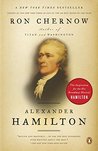
Alexander Hamilton by Ron Chernow

Alexander Hamilton

With the musical Hamilton making it to Austin this year I decided to read the book that inspired it before attending. A hefty tome—731 pages of narrative alone—but I managed to finish the day of the show. Very glad I did this; several friends said the show was hard to follow in places (especially around the actor playing Lafayette and Jefferson; his accent was thick and made him hard to understand even having heard the music before) but I was continually rewarded with recognition of where the songs matched the book. I found the musical to be excellent, and the book as well.

Other than Hamilton being the main author of The Federalist Papers, his visage being on the $10 bill, and his death as a result of a duel with the sitting Vice President at the time, my knowledge of the Founding Father was light on details. It is amazing to see how what he accomplished in only six years as the Secretary of the Treasury still affects us today. He fought for a strong central government and standing military led by the executive branch and for closer ties to Britian. He founded the US Mint, the first national bank, the Coast Guard, and the New York Post. His strong difference of opinion with Thomas Jefferson (who believed in strong state governments and a largely agrarian society) effectively created the political party system that still dominates politics now. Finally, Hamilton also was the first major American politican involved in a sex scandal, which in all likelihood prevented him from becoming President.

One quote that stuck with me: "[Hamilton] viewed 'hypocrisy and treachery' as 'the most successful commodities in the political market. It seems to the be the destined lot of nations to mistake their foes for their friends, their flatterers for their faithful servants." In our current era of amoral politicians, fake news, and idiological echo chambers this still rings true 226 years later. Hamilton was truly an impressive individual.

First Sentence:
Alexander Hamilton claimed Nevis in the British West Indies as his birthplace, although no surviving records substantiate this.

Friday, June 10, 2016

The Wright Brothers, by David McCullough

The Wright Brothers, by David McCullough

Wilbur and Orville Wright are two men that exemplify what it means to be an American inventor. At a time where most of the world thought heavier-than-air flight was a fool's errand at best, they took their lives in their hands in order to conquer the skies. Neither had a college degree, but Wilbur was a genius and Orville was one of the best mechanical minds of his age. By close examination of birds, careful reading of the work of fellow scientists, and daredevil experimentation they were the first people that safely flew a powered aircraft.

McCullough is an excellent writer and does a great job of telling the story of the brothers lives and their quest. They kept their aircraft and experiments largely private, so even after their initial successes most of the world remained skeptical. After finally holding public demonstrations in Europe and the US proving their accomplishments, the brothers became global heroes. Ironically, their flights to show the world were some of the last they ever made. Wilbur died of typhoid fever less than five years later, and Orville spent the remainder of his life fighting patent infringements and lawsuits. Despite this less than audacious end, the brothers names and accomplishments live on today, with possibly the coolest tribute being the fact that when Neil Armstrong walked on the moon, he carried a swatch of muslin from the wing of the brother's 1903 Flyer.

First Sentence:
In as strong a photograph as any taken of the brothers together, they sit side by side on the back porch steps of the Wright family home on a small side street on the west end of Dayton, Ohio.

Sunday, March 15, 2015

The System, by Jeff Benedict and Armen Keteyian

The System: The Glory and Scandal of Big-Time College Football, by Jeff Benedict and Armen Keteyian

I love college football. My wife and I have had season tickets for the Longhorns for over 20 years (although with the introduction of the poorly named Loyalty Program that may not last much longer) and I don't remember the last fall Saturday that wasn't spent watching the battle of the gridiron. The System is about the parts of the game not covered by the box scores, though: the boosters, the politics, the crime, and of course, the money.

Benedict and Keteyian don't have a single narrative, but instead structured the book like a series of essays. The exception to this is the tale of Mike Leach, from his decision to ignore his law degree in order to pursue football, to being the head coach of Texas Tech, to the idiocy of Craig James and his son causing Leach to lose that position, to his resurfacing as the leader of Washington State. (I always liked Leach and thought he was a great addition to the Big XII, even if his Red Raiders did stop the Longhorns from going to the National Championship in 2008.) Other chapters covered Don King, who ran the Yellow Rose strip club in Austin and offered VIP service to athletes (saying "I've done more for recruiting at UT than Mack Brown"), 17 year old Jane Brown at BYU who was raped by freshman football players (who were so new to campus they actually hadn't yet played in a game), the NCAA itself and its epic bungling of the Miami booster case, and essays titled "Crime and Punishment" (subtitled "SEC leads the nation") and "Gameday" ("The genius of ESPN").

The System provides a look at a variety of issues in college football, but doesn't attempt to provide any solutions. Challenges to the status quo like the Kessler antitrust suit, unionization, player stipends, and students rights to their own image aren't mentioned at all. This lack of detail and analysis keeps this book from being a true exposé, but it is still a great primer for the aspects of the sport not seen on College Gameday.

First Sentence:
On Saturday afternoons in the fall of 1981 the roar of the crowd would echo across campus every time BYU scored a touchdown.

Tuesday, February 17, 2015

The Right Stuff, by Tom Wolfe

The Right Stuff, by Tom Wolfe

I'm a huge fan of the movie The Right Stuffbut admit I've never actually read the book before now. As expected, the two have a lot in common, although Wolfe spends a lot more time describing the one-sided antagonism between the astronauts and classic pilots than the film does. A common theme was how the press made it sound like the Mercury astronauts were the first people to ever ride a rocket, but "Yeager had done precisely that more than forty times. Fifteen other pilots had done it also, and they had reached speeds greater than three times the speed of sound and an altitude of 126,000 feet." The jet test pilots believed they belonged at the top of the aircraft food chain, because after all the astronauts were intended to be mere passengers. "There was very little action that an astronaut could take in a Mercury capsule, other than to abort the flight and save his own life. So he was not being trained to fly the capsule. He was being trained to ride in it." The public disagreed, however, and the first group of astronauts were instant heroes long before ever getting near a rocket. "All seven, collectively, emerged in a golden haze as the seven finest pilots and bravest men in the United States. A blazing aura was upon them all." Ironically, Tom Wolfe wrote about the self-aggrandizement of both the pilots and astronauts, but the only picture in the book is of the author and Wolfe's name on the cover is three times as large as the title.

First Sentence:
Within five minutes, or ten minutes, no more than that, three of the others had called her on the telephone to ask her if she had heard that something had happened out there.

Sunday, February 09, 2014

Sex on the Moon, by Ben Mezrich

Sex on the Moon: The Amazing Story Behind the Most Audacious Heist in History, by Ben Mezrich

In 2002, Thad Roberts stole of some of the most rare and valuable items anywhere: moon rocks. Told in Mezrich's fictional non-fiction style, this is an entertaining romp telling how a brilliant kid with the world at his feet ended up in prison. Roberts is a fascinating person; raised in a strict Mormon household, when going on his mission trip he and his companions all told each other they'd already had sex. Roberts went one step further, though, and as he had been taught, confessed to his mission president. Instead of absolution, he was abruptly thrown out of the mission and the church, and after being returned home thrown out of his family as well. At nineteen years old, he was on his own with no support structure. From this inauspicious beginning, he reinvented himself as a scholar (majoring in geology, astronomy, and physics at the University of Utah) and an adrenalin junkie (becoming a pilot and a certified scuba instructor, and bicycling across the country), and eventually accepted into one of the most prestigious student programs in the country at NASA.

Why would such a confident and successful person commit such a public crime? The difficulty of the problem appealed to his intellectual side and the audacity of the act appealed to his daredevil side, but that is simply what made the act successful. What set Roberts off was when a scientist referred to the rocks as trash because they'd been outside of controlled environments and thus contaminated. Being a boy who had been disposed of by his religion and his family for being worthless, Roberts has a unique view on finding value where others do not; this view of the world is what led him to collect things he saw as unwanted. At Utah he stole "trash" fossils from the geology department for the same reason.

Doing a bit of research shows that Mezrich amalgamated several characters and there is a lot of dialog that couldn't possibly be authentic, explaining why this often reads more like a screenplay than a research paper. The gist of the story is accurate, though, and I learned quite a bit about a unique pop culture event—the theft of extraterrestrial material. While Sex on the Moon may be more "based on a true story" than "narrative nonfiction" it is still highly entertaining.

First Sentence:
There was something vaguely menacing about the folders.

Saturday, January 25, 2014

George Washington's Secret Six, by Brian Kilmeade and Don Yaeger

George Washington's Secret Six: The Spy Ring That Saved the American Revolution, by Brian Kilmeade and Don Yaeger

This is a pretty interesting book about the Culper Spy Ring which was active in New York during the American Revolution. I didn't know much about the ring other than through pop culture references in Y: The Last Man and White Collar and quite enjoyed learning more about it, and the major impact on the war the spies brought about. The biggest (but not only) coup the ring accomplished was providing key intelligence that eventually prevented Benedict Arnold from turning West Point over to the British. Truly fascinating.

This is an easy read, with short chapters and just over 200 pages written at maybe a middle-school level. There is a lot of dialog here, capturing conversations between characters that couldn't possibly be known today, making this an odd blend of fiction and non-fiction. Overall this certainly gets a thumbs up as a basic introduction to the Culper Ring, and a good set of references in the back for digging in further.

First Sentence:
The execution of Nathan Hale on September 22, 1776, was the lowest point in a month of low points for General George Washington.

Monday, December 02, 2013

Beer School, by Steve Hindy & Tom Potter

Beer School, by Steve Hindy & Tom Potter

The two founders of the Brooklyn Brewery wrote Beer School so I was expecting a straightforward corporate history describing how a couple of home brewers hit it big. Instead, I found a thoughtful look at entrepreneurship and business partnerships.

The chapters are written by one of the two founders, with the other weighing in at the conclusion often with a different point of view. Neither of these guys had ever started a business before; one was a foreign correspondent for the AP and the other was a middle-tier banker. They cover how they decided to go into partnership, writing their business plan, collecting funding, publicity, managing a staff and performance reviews, and deciding when to cash out among other things. It is an honest portrayal, covering mistakes as well as successes, and refreshingly the pair doesn't always agree.

The writing is uneven, with the styles of Hindy and Potter being quite different. Hindy is the better author (not surprising as he was a reporter); Potter's chapter on raising money was especially repetitive: "venture funding" is defined three times in four pages. Potter also has some odd ideas about management. "People who read lots of resumes, just like people who read lots of resumes, aren't looking for a creative format. They want something familiar and comprehensible." As someone that has been a people manager for over a decade I can't disagree more. I love when I see an original CV; even if it is terrible I appreciate that someone tried something different and the break from monotony it brings. When Potter discusses writing a business plan and mission statement, though, he comes off much more polished. Clearly when the topics skew closer to his comfort zone his writing improves.

The insights into starting a business were enlightening, and being set against the rise of the craft brewing industry in America over the past 25 years made this a surprisingly difficult book to put down. Much like beer itself!

First Sentence:
My head was thumping and I was drenched in sweat when I was jolted awake on a fresh sunny morning in May 1984 by the blasts of two mortar shells in the parking lot outside my second-floor room at the Alexander Hotel in East Beirut.

Monday, October 14, 2013

The Path Between the Seas, by David McCullough

The Path Between the Seas: The Creation of the Panama Canal 1870-1914, by David McCullough

Before reading The Path Between the Seas I knew very little about the Panama Canal other than the location, that the French started the project and failed, and it is the source of one of my favorite jokes in Arsenic and Old Lace: crazy Uncle Teddy "digging the canal" in the basement. I've always wanted to take a trip through the canal and I like reading histories, so I've been looking forward to this book for a while. As usual, McCullough doesn't disappoint.

It took nearly 45 years to build the canal, starting in 1870. There were several competing routes, but the French decided on Panama as the best place to make the cut. They had just successfully completed the Suez Canal and were considered the natural choice for bridging the Americas. Unfortunately as it turns out, digging across a desert at sea level does not take the same skills or technology as bridging a mountainous jungle region in the tropics. The death rate was astonishing in the early days. "Of every one hundred new arrivals at least twenty died, and of those who survived, only about twenty were were physically strong enough to do any real work." In about a decade, the estimates are as many as twenty-two thousand died. Disease was the main killer, as the world had yet to discover that mosquitoes carried malaria and yellow fever; in fact, the cause was so misunderstood that the legs of hospital beds were all placed in shallow bowls of water to protect against ants. If patients didn't have a serious disease when they entered the hospital, the odds were enormous they would before they left. The death toll was only one of several problems the French faced, though; poor engineering plans and irresponsible financing combined to guarantee the failure of the French effort. The only realistic remaining nation that could accomplish the feat was the U.S.A.

America didn't simply come in, pick up where France left off, and finish the canal, though. The US wanted a route across Nicaragua, and instead of a canal had wild plans such as hoisting ships out of the water and hauling them across Mexico on railroad cars. Obviously this isn't what eventually happened, but the story of what did is utterly compelling. Panama declaring independence from Columbia is just one of the momentous events of the era, and even knowing how it all ends I had a hard time putting the book down. As with all of McCullough's books, this is thoroughly researched, well-written, and highly recommended.

First Sentence:
The letter, several pages in length and signed by Secretary of the Navy George M. Robeson, was aggressed to Commander Thomas O. Selfridge.

Search This Blog